Blog

  • E-Way Bill Changes: GSTN Defers Key Updates to 1 August 2026

    E-Way Bill Changes: GSTN Defers Key Updates to 1 August 2026

    What Every Business Must Do Right Now

    E-Way Bill Changes
    E-Way Bill Changes

    Two critical E-Way Bill Changes announced by GSTN are now deferred to 1 August 2026.If your business moves goods across India, you cannot afford to ignore what just happened on the GSTN E-Way Bill portal. In a move that has been welcomed across industry, the Goods and Services Tax Network (GSTN) has officially deferred two major E-Way Bill changes  originally scheduled for 15 June 2026 to 1 August 2026. That gives you less than two months to get your systems, data, and teams ready.

    But here is the critical question: will your organisation use this window strategically, or will August arrive before your ERP has even been updated?

    In this detailed guide, CA Veena Adwani of Adwani & Co LLP  a multi-disciplinary professional services firm serving businesses since 1977 breaks down exactly what these E-Way Bill updates mean, why they matter, and the concrete steps your compliance team should take before the new rules kick in.

    Key Update at a Glance: GSTN has deferred two major E-Way Bill enhancements mandatory capture of “Ship To GSTIN” in Bill-To / Ship-To transactions, and the introduction of the Voluntary Closure of E-Way Bill facility from 15 June 2026 to 1 August 2026.

    Understanding the E-Way Bill Framework in India

    Before we dive into the specific E-Way Bill changes, it is important to understand the regulatory foundation on which this system rests. The E-Way Bill mechanism was introduced under Rule 138 of the CGST Rules, 2017. It mandates that a registered person causing the movement of goods of consignment value exceeding ₹50,000 must furnish the relevant information in Part A of Form GST EWB-01, either electronically on the GSTN E-Way Bill Portal (ewaybillgst.gov.in) or through a facilitation centre notified by the Commissioner.

    Over the years, the GSTN has continuously enhanced the E-Way Bill system to bring greater transparency, auditability, and alignment between physical goods movement and GST records. The two E-Way Bill updates now deferred to August 2026 are part of this continuous improvement process.

    The Two Key E-Way Bill Changes Deferred to August 2026

    1. Mandatory Capture of “Ship To GSTIN” in Bill-To / Ship-To Transactions

    In many commercial transactions, the party being billed is different from the party to whom the goods are physically delivered. This is the classic Bill-To / Ship-To scenario common in industries like FMCG, pharma, automobile, and manufacturing supply chains.

    Currently, E-Way Bills in such transactions often capture only the billing party’s details. Under the new E-Way Bill change, the GSTIN of the actual recipient at the delivery address the “Ship To GSTIN”  must be mandatorily captured. This change is designed to:

    • Improve traceability of goods at the point of actual delivery
    • Reduce mismatches between E-Way Bill data and GSTR-1 / GSTR-2B records
    • Strengthen the input tax credit (ITC) matching framework
    • Reduce instances of fake or fictitious transactions in the GST ecosystem

    From a compliance perspective, as per the GST Council’s stated objectives of strengthening the anti-evasion mechanism, accurate “Ship To GSTIN” data creates a digital audit trail directly linking the E-Way Bill with the supplier’s GST return a step that tax officers can use to verify the genuineness of ITC claims.

    2. Voluntary Closure of E-Way Bill Facility

    The second significant E-Way Bill update is the introduction of a Voluntary Closure feature. Currently, an E-Way Bill automatically expires after its validity period elapses based on distance. If the goods have been delivered before that period ends, there is no mechanism for the generator to proactively close or mark the EWB as delivered.

    The new Voluntary Closure facility will allow the EWB generator to:

    • Proactively close an E-Way Bill once the consignment has been delivered
    • Prevent misuse of an open EWB after actual delivery
    • Maintain a cleaner, more accurate EWB lifecycle in the GSTN system
    • Reduce the administrative burden of tracking open EWBs

    This is a particularly meaningful change for businesses running high-volume logistics operations, where thousands of EWBs are generated monthly. The ability to voluntarily close delivered consignments will bring both operational clarity and better GST compliance hygiene.

    Why GSTN Deferred These E-Way Bill Changes

    The deferment from 15 June 2026 to 1 August 2026 was not a surprise to those who closely follow GST technology implementation cycles. Change management in the Indian GST ecosystem is complex it involves not just GSTN but also:

    • Thousands of ERP and accounting software vendors across India
    • GST Suvidha Providers (GSPs) and Application Service Providers (ASPs)
    • Large enterprises running SAP, Oracle, or Microsoft Dynamics
    • Small businesses using Tally, Zoho Books, or other SME-grade software
    • Logistics and transporter companies generating EWBs in bulk

    Each of these stakeholders needs time to update their API integrations, test new workflows, clean up master data, and train operational staff. The extension reflects GSTN’s practical, industry-focused approach aligning with the Central Board of Indirect Taxes & Customs (CBIC) ‘s broader goal of making GST compliance as seamless as possible for legitimate businesses.

    📌 Important Perspective: The additional time should not be viewed as a delay. It is an opportunity and the businesses that treat it as such will be far better positioned on 1 August 2026.

    A Practical Example: How the E-Way Bill Change Affects You

    Real-World Scenario

    Company ABC Pvt. Ltd. (Mumbai) sells 500 units of industrial equipment to XYZ Distributors Pvt. Ltd. (Delhi) but the goods are to be delivered directly to XYZ’s warehouse in Pune (billed to Delhi, shipped to Pune).

    Before the E-Way Bill change: ABC’s team generates an EWB showing XYZ’s Delhi GSTIN as the recipient. The Pune delivery address appears in the transporter field, but no GSTIN for the Pune entity is captured.

    After the E-Way Bill change (from 1 August 2026): ABC must now also capture the “Ship To GSTIN” of the Pune warehouse/entity in the EWB form. If XYZ’s Pune branch is separately registered under GST, its GSTIN must be entered. If not separately registered, the same Delhi GSTIN may apply but the field cannot be left blank.

    Action required by ABC: Update its ERP master data for all consignee locations, verify Ship-To GSTINs, and configure the EWB generation workflow to capture this field before August 1.

    This simple example illustrates why GSTIN master data validation is among the most urgent tasks businesses must complete before the E-Way Bill update goes live.

    E-Way Bill Compliance Checklist: Prepare Before 1 August 2026

    CA Veena Adwani recommends the following structured approach for businesses preparing for the upcoming E-Way Bill changes:

    Action AreaWhat To DoPriority
    Master DataValidate and update “Ship To GSTIN” for all consignee and delivery locations🔴 High
    ERP / SoftwareCoordinate with your ERP vendor to activate the new Ship To GSTIN field and Voluntary Closure API🔴 High
    API IntegrationTest updated GSTN API calls on the sandbox environment before production go-live🔴 High
    Process ReviewUpdate internal SOPs for logistics, invoicing, and EWB generation teams🟡 Medium
    Team TrainingTrain accounts, logistics, and dispatch teams on the new requirements🟡 Medium
    Vendor AlignmentInform key suppliers and customers about the Ship To GSTIN requirement🟡 Medium
    Internal AuditAudit existing open E-Way Bills and plan for Voluntary Closure hygiene🟢 Ongoing

    Why E-Way Bill Compliance Matters More Than Ever in 2026

    The Indian GST ecosystem is increasingly technology-driven. The GSTN’s data analytics capabilities have grown significantly and the tax department now uses AI-based risk profiling to detect mismatches between E-Way Bill data, GST returns (GSTR-1, GSTR-3B), and e-invoice records. In this environment, data accuracy in the E-Way Bill system is not just an operational nicety it is a compliance necessity.

    As confirmed by the official GST Portal (gst.gov.in) , the government is systematically integrating E-Way Bill data with GST return data to cross-verify transactions. Businesses with inconsistent or incomplete EWB data face higher scrutiny during GST audits and assessments.

    Section 129 of the CGST Act empowers tax officers to detain and seize goods in transit if E-Way Bill requirements are not met. Section 122 provides for penalties in case of non-compliance. The financial and operational cost of non-compliance including detention of goods, penalties, and audit exposure far outweighs the investment needed to prepare correctly.

    How Adwani & Co LLP Can Help with E-Way Bill Compliance

    At Adwani & Co LLP, we have been supporting businesses with GST compliance, advisory, and technology readiness since the introduction of GST in India. CA Veena Adwani and the firm’s indirect tax team regularly assist clients in:

    • Conducting GSTIN master data audits and cleansing exercises
    • Reviewing ERP configurations for GST and E-Way Bill compliance
    • Liaising with ERP vendors and GSPs for API update readiness
    • Preparing internal compliance SOPs and training material for teams
    • Conducting pre-implementation reviews and mock drills
    • Providing ongoing GST advisory to ensure seamless compliance

    With over four decades of professional practice founded on the principles established by our firm’s founder, Advocate N.T. Adwani in 1977 Adwani & Co LLP brings a combination of technical expertise, regulatory depth, and practical business understanding to every engagement.

    E-Way Bill Changes and the Broader GST Technology Shift

    The E-Way Bill changes deferred to August 2026 are part of a larger wave of GST technology upgrades. Recent years have seen the rollout of e-invoicing (now mandatory for businesses above ₹5 crore turnover), the introduction of the Invoice Management System (IMS) for better ITC reconciliation, and increasing integration between the Income Tax Department and GST systems for cross-verification of financial data.

    As the Income Tax Department of India and the GST Council continue to harmonise their data frameworks, the accuracy of your GST filings and E-Way Bill records will increasingly determine your risk profile across both direct and indirect tax assessments.

    The message is clear: GST compliance preparedness is no longer optional. It is a core business function and organisations that invest in it proactively will enjoy smoother audits, cleaner credit flows, and lower regulatory risk.

    Learn about our Virtual CFO & Strategic Finance services →

    Conclusion: August 2026 Will Arrive Faster Than You Think

    The GSTN’s decision to defer the E-Way Bill changes to 1 August 2026 is a practical and welcome relief but it must be treated as a deadline, not a safety net. Businesses that use the coming weeks to validate their GSTIN master data, update their ERP systems, and train their teams will navigate the transition smoothly. Those that wait will face avoidable disruption at precisely the moment their competitors are moving ahead.

    The two changes mandatory “Ship To GSTIN” capture and Voluntary Closure of E-Way Bill  are individually straightforward, but implementing them across a complex ERP and logistics landscape requires careful planning and execution. Start now.

    As CA Veena Adwani often advises clients: “In compliance, the cost of being early is negligible. The cost of being late can be severe.”

    1.What are the new E-Way Bill changes effective 1 August 2026?

    From 1 August 2026, two key E-Way Bill changes come into effect: (1) the mandatory capture of the “Ship To GSTIN” in all Bill-To / Ship-To E-Way Bill transactions, and (2) the introduction of the Voluntary Closure of E-Way Bill facility. Both were originally scheduled for 15 June 2026 but were deferred by GSTN to allow businesses more time to prepare.


    2. Why did GSTN defer the E-Way Bill update from june to August 2026?

    GSTN deferred the implementation to allow businesses, ERP software vendors, GST Suvidha Providers (GSPs), and GST technology partners adequate time to update their systems, integrate new APIs, validate master data, and train their operational teams. The deferment reflects a practical, industry-sensitive approach to change management in the GST ecosystem.

    3. What exactly is “Ship To GSTIN’ in the E-Way Bill context?

    In Bill-To / Ship-To transactions, goods are billed to one registered entity but physically delivered to a different location or entity. The “Ship To GSTIN” is the GST Identification Number of the actual consignee at the delivery location. From August 2026, this field will be mandatory in E-Way Bills, ensuring a complete digital trail from the point of sale to the point of delivery.

    4. How does the voluntary closure of E-Way Bill feature work?

    The Voluntary Closure feature allows the generator of an E-Way Bill to proactively mark it as closed once the goods have been delivered before the EWB’s automatic validity period expires. This prevents misuse of open EWBs after actual delivery, improves EWB lifecycle management, and maintains data cleanliness in the GSTN system.

    5.What happens if a business fails to comply with E-Way Bill rules?

    Non-compliance with E-Way Bill requirements can attract serious consequences under the CGST Act, 2017. Section 129 empowers tax officers to detain and seize goods in transit. Section 122 provides for penalties for non-compliance. In addition, discrepancies in EWB data relative to GST returns can trigger scrutiny notices and audit proceedings from the GST department.

    6.Does the E-Way Bill change apply to all businesses in India?

    The mandatory “Ship To GSTIN” requirement applies specifically to Bill-To / Ship-To transactions i.e., where the billing party and the delivery party are different. Businesses that frequently undertake such transactions (e.g., manufacturers, distributors, FMCG companies) are most immediately affected. However, all businesses generating E-Way Bills should review their processes to determine applicability.

    7.Where can I find official updates on E-Way Bill changes?

    Official E-Way Bill notifications and technical advisories are published on the GSTN E-Way Bill Portal (ewaybillgst.gov.in) and the GST Portal (gst.gov.in). Always refer to these authoritative government sources for the latest regulatory notifications. For personalised advisory, you can reach out to Adwani & Co LLP.

    Ready for E-Way Bill Changes? Let Adwani & Co LLP Guide You

    Do not wait until August. Our expert GST and compliance team can review your E-Way Bill readiness, audit your GSTIN master data, and ensure your systems are configured correctly long before the 1 August 2026 deadline.
    📞 Schedule a Consultation Explore GST Services

    Author

    CA Veena Adwani is a Chartered Accountant associated with Adwani & Co and is actively involved in statutory compliance and systems audit assignments.

  • NRI ITR Filing 2026: Costly Mistakes & Smart Tax Strategies

    NRI ITR Filing 2026: Costly Mistakes & Smart Tax Strategies

    CA Dipesh Gurubakshani June 2026 9 min read

    NRI ITR Filing 2026

    The Wrong Box That Costs NRIs Thousands

    One wrong selection on a single screen. That’s all it takes.

    Thousands of Non-Resident Indians file their income tax returns in India every year believing they’ve done everything right only to receive notices, see refunds delayed by months, or discover their tax computation was incorrect all along. The irony? Most of these errors have nothing to do with the amount of income earned. They come from procedural gaps, misunderstood rules, and assumptions that simply don’t apply to NRI taxpayers.

    If you are an NRI with income from India bank interest, rent, dividends, capital gains, or even F&O trading this guide on NRI ITR filing in 2026 will walk you through every critical area you cannot afford to get wrong.


    Why NRI ITR Filing 2026 Is More Complex Than It Looks

    NRI ITR filing is not complicated because NRIs earn more. It’s complicated because the rules that apply to resident Indians including popular benefits like the Section 87A rebate do not automatically extend to NRIs.

    The Income Tax Department of India has clearly outlined residential status as the foundation of tax liability determination. Under the Income Tax Act, 1961, your residential status in a given financial year determines which incomes are taxable, which deductions are available, and which ITR form is applicable. Getting any of these wrong can spiral into compliance issues that take months to resolve.

    According to Dr. Haresh Adwani PhD in Commerce, law graduate, and founding partner of Adwani and Company “NRIs often approach ITR filing the way a resident would. That’s the first and most expensive mistake they make. The rules diverge significantly, and the cost of that divergence is almost always paid later.”


    The Most Common NRI ITR Filing Mistakes in 2026

    Mistake 1 : Filing the Wrong ITR Form

    This is the single most frequent error in NRI income tax return filing in India. Choosing the wrong form results in a defective return notice under Section 139(9), forcing a refiling under deadline pressure.

    Here’s the correct framework for NRI ITR form selection in 2026:

    ITR 2 is the correct form if the NRI has:

    • Interest income from NRO/NRE bank accounts
    • Capital gains from shares, mutual funds, or property
    • Dividend income from Indian companies
    • Rental income from property in India
    • No business or professional income

    ITR 3 becomes mandatory if the NRI has:

    • Intraday trading income
    • F&O (Futures & Options) income
    • Any business or professional income earned from India

    Many NRIs who do casual trading on Indian exchanges mistakenly file ITR 2, which does not accommodate F&O income. This mismatch is flagged by the Income Tax Department’s automated systems, often triggering scrutiny notices. Learn more about our ITR-2 and ITR-3 Filing Support for NRIs


    Mistake 2 : Claiming the Section 87A Rebate as an NRI

    This is perhaps the most misunderstood provision in NRI ITR filing. Section 87A of the Income Tax Act provides a rebate of up to ₹12,500 (or up to ₹25,000 under the new tax regime) to resident individuals whose total income does not exceed the specified threshold.

    Section 87A rebate is NOT available to NRIs. Full stop.

    Many NRI taxpayers and even some tax preparers incorrectly apply this rebate, which either creates a mismatch during ITR processing or results in a demand notice later. If you are an NRI with income tax liability in India, the full tax must be paid without this rebate.


    Mistake 3 : Skipping the Old vs New Tax Regime Comparison

    The old vs new tax regime comparison for NRIs in 2026 is not optional it’s essential. Unlike resident taxpayers who may have a default regime applied by their employer, NRIs must make an informed, independent choice when filing.

    Practical Example:

    Consider an NRI with the following Indian income profile for FY 2025-26:

    Income TypeAmount
    NRO Bank Interest₹1,20,000
    Rental Income (after 30% standard deduction)₹2,10,000
    Long-Term Capital Gains (LTCG) on Shares₹1,50,000
    Dividend Income₹40,000
    Total Income₹5,20,000

    Under the old tax regime, this NRI could claim Section 80C deductions (if applicable) on eligible investments, potentially reducing taxable income. Under the new tax regime, no 80C deductions are available, but a simplified slab structure applies.

    Critically, LTCG above ₹1.25 lakh on listed equity is taxed at 12.5% flat (post-Budget 2024 amendment) regardless of regime. The regime choice primarily impacts ordinary income slabs.

    Without running this comparison before filing, many NRIs end up paying more tax than required. Read our detailed guide on Old vs New Tax Regime 2026 for NRIs


    Mistake 4 : Not Reconciling AIS and Form 26AS

    Before filing any NRI income tax return in India, reconciling your AIS (Annual Information Statement) and Form 26AS is non-negotiable. These documents reflect what banks, mutual funds, brokers, and property registrars have reported to the Income Tax Department against your PAN.

    In 2026, the Income Tax Department’s data-matching infrastructure is significantly more sophisticated. TDS deducted on NRO interest, rent payments, and capital gains transactions are all pre-populated in the AIS. If your ITR does not match these figures, the return gets flagged automatically.

    Dr. Haresh Adwani notes: “We routinely see NRI clients where TDS has been deducted at 30% on NRO interest, but the credit doesn’t appear in their ITR because they didn’t verify Form 26AS. That means a valid TDS credit goes unclaimed, and the refund is delayed or rejected.”


    Mistake 5 : Incorrect Residential Status Declaration

    Your residential status under the Income Tax Act is determined by the number of days spent in India during the financial year not by your passport or visa status. The rules are precise:

    • Resident (Ordinary Resident): 182 days or more in India in the FY, or 60 days in the FY + 365 days in the preceding 4 years
    • NRI: Does not meet the above conditions

    A person of Indian origin visiting India for extended periods may unknowingly cross the residential threshold and become taxable on global income a scenario that carries serious consequences. The 120-day rule introduced in the Finance Act, 2020 (for Indian citizens with income above ₹15 lakh from India) adds another layer of complexity.

    Getting residential status wrong in the ITR not only affects what income is taxable but also which deductions and forms are applicable.


    Key Areas of NRI Capital Gains Tax Reporting in 2026

    NRI capital gains tax reporting in India is an area where documentation and categorization make all the difference.

    For listed equity shares and equity mutual funds:

    • STCG (held < 12 months): Taxed at 20% flat (revised from 15% post-Budget 2024)
    • LTCG (held ≥ 12 months, above ₹1.25 lakh): Taxed at 12.5% without indexation

    For unlisted shares and property:

    • STCG: As per slab rate
    • LTCG: 12.5% without indexation (property) post-Budget 2024 changes

    NRIs must also note that TDS is deducted by the buyer at source on property transactions typically at 20% + surcharge + cess. Filing ITR allows NRIs to claim a refund if actual LTCG tax liability is lower than the TDS deducted.


    Smart NRI ITR Filing Strategy for AY 2026-27

    Here’s a structured checklist that Dr. Haresh Adwani and the team at Adwani and Company recommend for every NRI preparing to file their ITR for AY 2026-27:

    ✅ Confirm residential status for FY 2025-26 based on actual days in India

    ✅ Select the correct ITR form : ITR 2 or ITR 3

    ✅ Download and reconcile AIS + Form 26AS before filing

    ✅ Declare all Indian income — interest, rent, dividends, capital gains

    ✅ Do NOT claim Section 87A rebate

    ✅ Compare old vs new tax regime based on actual deduction eligibility

    ✅ Verify all TDS credits reflected correctly for refund claims

    ✅ Validate Indian bank account (NRO/NRE) linked for refund credit

    ✅ Ensure correct Schedule CG, Schedule SI, and Schedule OS entries

    Frequently Asked Questions

    Q1. Which ITR form should an NRI file for AY 2026-27?

    Most NRIs with interest, rental, dividend, or capital gains income should file ITR 2. If the NRI has intraday trading, F&O, or business income from India, ITR 3 is mandatory.

    Q2. Is Section 87A tax rebate available to NRIs in 2026?

    ? No. Section 87A rebate is available only to resident individuals. NRIs are not eligible for this rebate regardless of income level or the tax regime chosen.

    Q3. Do NRIs need to pay tax on NRE account interest?

    Interest earned on NRE (Non-Resident External) accounts is exempt from Indian income tax as long as the individual maintains NRI status. NRO account interest, however, is fully taxable in India.

    04. What happens if an NRI files the wrong ITR form?

    Filing an incorrect ITR form results in a defective return notice under Section 139(9). The taxpayer is given 15 days to rectify the error. Failure to do so may result in the return being treated as not filed, with applicable penalties.

    05. How can NRIs avoid refund delays in ITR filing 2026?

    NRIs should validate their Indian bank account (preferably NRO) on the e-filing portal before filing, reconcile AIS and Form 26AS thoroughly, and ensure all TDS credits are correctly claimed in the ITR to avoid processing delays.

    Conclusion :

    NRI ITR filing in 2026 is not a form-filling exercise — it’s a tax strategy exercise. Every decision, from residential status declaration to ITR form selection, regime comparison, and capital gains reporting, has a direct financial impact.

    The Income Tax Department has made it unambiguously clear through its compliance frameworks and AIS data infrastructure that NRIs are now under the same level of scrutiny as resident taxpayers. The difference is that NRIs have fewer automatic safeguards and must actively navigate a more complex set of rules.

    Don’t let a procedural oversight cost you money or invite a notice from the Income Tax Department.

    Author

    CA Dipesh Gurubakshani is a Chartered Accountant with Adwani & Co LLP, Pune, specialising in income tax audit, direct taxation, and accounting advisory. He supports clients across statutory compliance, financial reporting, and income tax matters with a focus on accuracy, regulatory adherence, and disciplined execution.

  • AIS vs Form 26AS vs Form 16: ITR Filing Guide 2026-27

    AIS vs Form 26AS vs Form 16: ITR Filing Guide 2026-27

    AIS vs Form 26AS vs Form 16
    AIS vs Form 26AS vs Form 16

    Every year, thousands of Indian taxpayers file their Income Tax Return (ITR) relying solely on Form 16 and every year, thousands receive a tax notice. The Income Tax Department already knows about your savings account interest, your mutual fund redemptions, your dividend income, and your property transactions. If your ITR does not match what the department already holds in its systems, you will get a notice. The good news? Fifteen minutes of reconciliation can save you months of compliance headaches. This guide walks you through exactly how to reconcile AIS vsForm 26AS vs Form 16 before filing your ITR for AY 2026-27.


    Understanding the Three Key Documents for ITR Filing AY 2026-27

    Before filing your Income Tax Return for AY 2026-27, it is essential to understand the purpose and scope of each document. Dr. Haresh Adwani, a Ph.D. holder in Commerce and law graduate with deep legal knowledge, consistently emphasises at Adwani and Company that most tax notices arise not from intentional concealment but from simple information mismatches between these three documents.


    AIS vs Form 26AS vs Form 16: Full Comparison for ITR Filing

    The table below illustrates why relying only on Form 16 while filing your ITR for AY 2026-27 is risky. AIS captures financial data across multiple sources banks, registrars, mutual fund houses, and foreign remittance portals all of which report directly to the Income Tax Department under Section 285BA of the Income Tax Act, 1961.

    ParticularsForm 16Form 26ASAIS
    Issued byEmployerIT DepartmentIT Department
    Salary details✔ YesLimited✔ Yes
    TDS details✔ Yes✔ Yes✔ Yes
    Bank interest income✗ NoLimited✔ Yes
    FD interest✗ NoLimited✔ Yes
    Dividend income✗ No✗ No✔ Yes
    Share transactions✗ No✗ No✔ Yes
    Mutual fund transactions✗ No✗ No✔ Yes
    Property transactions✗ NoLimited✔ Yes
    Foreign remittances✗ No✗ No✔ Yes
    High value cash deposits✗ No✗ No✔ Yes
    Credit card payments✗ No✗ No✔ Yes
    Advance tax paid✗ No✔ Yes✔ Yes

    The AIS is accessible through the Income Tax e-filing portal at incometax.gov.in under the “Annual Information Statement” tab. The Income Tax Department introduced AIS to ensure comprehensive pre-filled information and reduce information asymmetry in ITR filing.


    Why Form 16 Alone Is Not Enough for Accurate ITR Filing

    This is the single most important lesson for every salaried taxpayer, according to Dr. Haresh Adwani of Adwani and Company. Form 16 covers only what your employer paid you and deducted as TDS. But your financial life is far broader and the Income Tax Department receives third-party reports from over 50 categories of reporting entities under the Statement of Financial Transactions (SFT) framework.

    Practical example: what the IT department sees vs what Form 16 shows

    Your Form 16 for FY 2025-26 shows:

    • Salary income -₹12,00,000
    • TDS deducted by employer -₹1,05,000

    But your AIS for FY 2025-26 also shows:

    • Savings bank interest – ₹18,500
    • Fixed deposit interest – ₹72,000
    • Dividend income (listed stocks) – ₹15,000
    • Mutual fund redemption proceeds – ₹3,50,000

    Total additional income visible to IT Dept: ₹1,05,500 + capital gains on ₹3,50,000 MF redemption

    If this is not included in your ITR, the Income Tax Department’s automated systems will detect the mismatch and may issue a notice under Section 143(1) or Section 148A.


    7 Point Pre-Filing Checklist: Reconcile AIS, Form 26AS & Form 16

    Dr. Haresh Adwani recommends this structured checklist at Adwani and Company before any taxpayer hits the “Submit” button on their ITR for AY 2026-27. Each step addresses a common source of mismatch notices.

    • 1. Match salary income across Form 16 and AISThe gross salary figure in Form 16 (Part B) should reconcile exactly with the salary reported in AIS. Discrepancies often arise from mid-year employer changes, arrear payments, or taxable perquisites. Check both carefully.
    • 2. Verify all TDS credits in Form 26ASEvery TDS deducted by employer, bank, or any other deductor must reflect in Form 26AS under the correct PAN. If TDS is not reflecting, contact the deductor to file a correction before you file your ITR. Claiming TDS that is not in Form 26AS leads to demand notices.
    • 3.Check savings and FD interest in AISAIS aggregates interest income from all banks and NBFCs linked to your PAN. Many taxpayers forget dormant accounts, joint accounts, or FDs opened in a relative’s name. Under Section 10(15), only small savings scheme interest qualifies for exemption the rest is fully taxable.
    • 4.Review capital gain transactions from shares and mutual fundsAIS captures details of all listed security transactions and mutual fund redemptions reported by depositories (NSDL/CDSL) and mutual fund registrars (CAMS/KFintech). Compute short-term and long-term capital gains separately, applying the correct tax rates post the Finance Act 2024 amendments (LTCG at 12.5% above ₹1.25 lakh, STCG at 20%).
    • 5.Verify dividend incomeSince FY 2020-21, dividend income from shares and mutual funds is taxable in the hands of the investor. AIS shows dividend data reported by companies and mutual funds. Ensure this is included under “Income from Other Sources” in your ITR.
    • 6.Check high-value transactions in AISThe Income Tax Department receives mandatory SFT reports for: property purchases or sales above ₹30 lakh, cash deposits above ₹10 lakh in savings accounts, credit card payments above ₹1 lakh (cash) or ₹10 lakh (overall), and foreign remittances under the Liberalised Remittance Scheme (LRS). All such transactions appear in AIS and must be reconciled with your ITR.
    • 7.Verify all tax payments: advance tax, self-assessment tax, TDS, and TCSForm 26AS is the authoritative tax credit statement. Before filing, confirm that all challan payments (advance tax under Section 209, self-assessment tax under Section 140A) are correctly reflecting. Any TCS collected on foreign remittances, luxury car purchases, or overseas travel should also be claimed appropriately.

    For a detailed guide on tax payment reconciliation, learn more about our Tax Filing and Compliance services at Adwani and Company.


    How to Access AIS and Form 26AS Before Filing ITR for AY 2026-27

    Accessing AIS

    Log in to the Income Tax e-filing portal at incometax.gov.in 

    → Navigate to “Services”

    → “Annual Information Statement (AIS)”

    → Download the AIS PDF or JSON.

    The Taxpayer Information Summary (TIS) within AIS provides a consolidated view suitable for ITR pre-filling. According to the Income Tax Department’s official guidelines, taxpayers should review and submit feedback if any information in the AIS is incorrect or duplicated before filing their return.

    Accessing Form 26AS

    Log in to the e-filing portal → “e-File” → “Income Tax Returns” → “View Form 26AS”. Alternatively, access it through your Net Banking portal (most Indian banks provide a direct link). The TRACES portal at tdscpc.gov.in also allows taxpayer login for Form 26AS downloads.

    Accessing Form 16

    Form 16 is issued by your employer on or before 15 June following the end of the financial year. If you have changed jobs during FY 2025-26, ensure you have Form 16 from both employers the combined salary must be disclosed in your ITR. 

    Professional tip from Dr. Haresh Adwani, Adwani and Company

    Form 16 tells you what your employer reported  salary, TDS, and allowances for the year.

    Form 26AS tells you what taxes have been deposited against your PAN the authoritative credit statement.

    AISTells you what the Income Tax Department already knows about all your financial activity. File accordingly.


    Common Reasons for Income Tax Notices Related to ITR AY 2026-27

    The Ministry of Finance and the Central Board of Direct Taxes (CBDT) have progressively enhanced third-party data integration with the ITR filing system. The pre-filled ITR form now draws data directly from AIS. As a result, mismatches are flagged automatically without any manual scrutiny. Common triggers include:

    • Interest income omittedFD and savings interest not reported under “Income from Other Sources”.
    • Capital gains from mutual funds or shares not reportedEven if the gain is below the exemption threshold, the transaction must be disclosed.
    • Dividend income not includedDividends received from stocks or mutual fund schemes since FY 2020-21 are fully taxable and must be reported.
    • TDS claimed exceeds Form 26AS creditIf the deductor has not deposited TDS, you cannot claim it. This creates a demand after processing.
    • High-value transactions without matching incomeA large property purchase or high credit card spend with no corresponding income explanation can trigger scrutiny.

    Key takeaway from Adwani and Company: 

    The most common cause of post-filing notices is not deliberate tax evasion. It is a mismatch between the information in your ITR and information already available with the Income Tax Department. Reconciling Form 16 + Form 26AS + AIS before filing eliminates this risk almost entirely.


    The 15-Minute Reconciliation Formula Before Filing ITR

    According to Dr. Haresh Adwani, even a basic 15-minute reconciliation exercise can prevent the majority of AY 2026-27 ITR notices for salaried individuals.

    Step 1 -Download AIS from incometax.gov.in and review all entries. Submit feedback for any incorrect entries.

    Step 2 – Download Form 26AS and confirm all TDS credits, advance tax payments, and self-assessment tax challans are correctly reflected.

    Step 3 – Cross check salary in Form 16 (Part B) with AIS salary data.

    Step 4 -Note all additional income sources visible in AIS (interest, dividend, capital gains, rental income, foreign remittances) and ensure each is captured in your ITR.

    Step 5 – File only after all three documents are reconciled. If discrepancies exist that you cannot resolve, seek professional guidance before submission.

    Learn more about our ITR filing and reconciliation services at Adwani and Company – trusted by hundreds of salaried professionals and businesses across India.

    Frequently Asked Questions

    1.What is the difference between AIS and Form 26AS for ITR filing?

    Form 26AS is a tax credit statement that shows TDS deducted, TCS collected, and direct taxes paid against your PAN. AIS (Annual Information Statement) is a far more comprehensive document that shows all financial transactions reported to the Income Tax Department including interest, dividends, capital gains, property transactions, and foreign remittances. AIS subsumes and expands beyond Form 26AS for the purpose of ITR filing.


    2.Is AIS mandatory to check before filing ITR for AY 2026-27?

    While the Income Tax Act does not legally mandate reviewing AIS before filing, the Income Tax Department strongly recommends it. Since the ITR pre-fill now draws from AIS data, any discrepancy between your filed return and AIS can trigger automated notices under Section 143(1). Reviewing AIS before filing is considered best practice by all tax professionals, including Dr. Haresh Adwani at Adwani and Company.


    3.What should I do if the information in AIS is incorrect?

    You can submit online feedback directly on the AIS portal at incometax.gov.in. Options include marking information as “Information is correct”, “Information is not fully correct”, “Information relates to another PAN/Year”, or “Information is duplicate”. Submitting accurate feedback before filing helps avoid notices and ensures the Taxpayer Information Summary (TIS) reflects the correct data for pre-filling.

    4.What happens if there is a mismatch between Form 16 and AIS?

    A mismatch between Form 16 and AIS is usually because Form 16 only reflects employer-reported data, while AIS aggregates data from multiple sources. Always reconcile both before filing. If the mismatch is due to an employer’s error in Form 16, contact your employer’s payroll or HR department to issue a corrected Form 16. If the mismatch is due to incorrect AIS data, submit feedback on the AIS portal.


    5.Can I file ITR without Form 16 if I have AIS and Form 26AS?

    Yes, Form 16 is not a mandatory document for filing ITR. However, it simplifies the process for salaried taxpayers. If you do not have Form 16, you can use your salary slips, Form 26AS, and AIS to reconstruct income and TDS data for accurate ITR filing. Consulting a CA like Dr. Haresh Adwani at Adwani and Company is advisable if you are filing without Form 16.

    6.What is the due date for ITR filing for AY 2026-27?

    For individuals not subject to audit, the due date for filing ITR for Assessment Year 2026-27 (Financial Year 2025-26) is 31 July 2026. For taxpayers subject to audit, the due date is typically 31 October 2026. Always check the Income Tax Department’s official portal for any notifications regarding due date extensions.

    7.Which ITR form should salaried individuals use for AY 2026-27?

    Most salaried individuals with income from salary, one house property, and other sources (interest, dividends) file ITR-1 (Sahaj). If you have capital gains from shares or mutual funds, you must file ITR-2. If you have business income, ITR-3 or ITR-4 may apply. Read our detailed guide on choosing the correct ITR form for AY 2026-27.

    Conclusion: File a Clean ITR for AY 2026-27 with Full Reconciliation

    The Income Tax Department has made a significant shift over the past few years: it now receives comprehensive financial information about taxpayers from dozens of reporting entities before a single return is filed. AIS is the public-facing reflection of this data. Form 26AS validates your tax payments. Form 16 is your employer’s certificate. Together, they form the complete picture of your tax obligation for FY 2025-26.

    Filing an ITR that does not align with AIS is not just risky it is increasingly avoidable, given the pre-fill functionality now available on the portal. As Dr. Haresh Adwani of Adwani and Company consistently advises: spend fifteen minutes reconciling all three documents, address any discrepancies proactively, and file a return that matches the department’s own records. That is the single most effective way to ensure a clean, notice-free ITR for AY 2026-27.

    Author

    Dr. Haresh Adwani

    PhD Commerce | Law Graduate

    Founder and Senior Partner, Adwani and Company. Over 40 years of expertise in income tax, corporate law, GST, and financial advisory.

    Legal Disclaimer: This article is published for informational and educational purposes only. Nothing contained herein constitutes legal, financial, or tax advice, nor should it be treated as a substitute for professional consultation tailored to your specific circumstances. Tax laws, rates, and provisions are subject to change; readers are strongly advised to consult a qualified Chartered Accountant or tax advisor before acting on any information in this article.

    All content is original. References to government portals and statutory provisions are paraphrased for educational purposes in compliance with fair use principles. No content has been reproduced from third-party sources

  • ITR Filing 2025-26: Which ITR Form Is Right for You?

    ITR Filing 2025-26: Which ITR Form Is Right for You?

    June 2026•Nidhi Adwani

    Which ITR form should I file? ITR filing 2025-26

    Every year, millions of Indian taxpayers ask one urgent question as the deadline approaches: Which ITR form should I file? Get it wrong, and you’re looking at a defective return notice, penalties, or worse a scrutiny assessment from the Income Tax Department. With ITR filing 2025-26 season now open, choosing the right form ITR 1, ITR 2, ITR 3, or ITR 4 is more critical than ever. This guide breaks it all down, clearly and completely.

    hether you are a salaried professional earning from a single employer, a business owner with multiple income streams, or a freelancer opting for the presumptive tax scheme, the correct ITR form determines the validity of your income tax return 2025-26. Filing the wrong form is treated as a non-filing by the Income Tax Department of India, and that carries serious consequences. This blog is your definitive resource for understanding ITR 1 vs ITR 2 vs ITR 3 vs ITR 4. For a quick comparison table, also

    See our detailed guide: ITR 1 vs ITR 2 vs ITR 3 vs ITR 4 : Complete 2025 Comparison


    Why Choosing the Correct ITR Form Matters for ITR Filing 2025-26

    The Income Tax Department processes over 8 crore returns annually. According to guidelines issued by the Central Board of Direct Taxes (CBDT), filing an incorrect ITR form renders the return defective under Section 139(9) of the Income Tax Act. The assessee is then given 15 days to correct and re-file but during this window, refunds are held, and interest on outstanding tax continues to accrue.

    Dr. Haresh Adwani, Ph.D. in Commerce and a Law Graduate with over a decade of tax advisory experience at Adwani and Company, explains it plainly: “Most errors I see in practice are not calculation errors they are form-selection errors. A taxpayer with capital gains blithely files ITR 1, which doesn’t accommodate that income. The return is flagged before processing even begins.”

    Getting your ITR filing 2025-26 right from the start saves you time, avoids notices, and ensures your refund reaches you faster.


    What’s New in ITR Filing 2025-26? Key Changes You Must Know

    Before diving into form eligibility, it’s worth noting the changes effective for Assessment Year (AY) 2026-27, i.e., income earned in Financial Year 2025-26:

    • The new tax regime is now the default regime for all individuals. If you wish to opt for the old regime with deductions (80C, 80D, HRA, etc.), you must explicitly select it while filing.
    • The basic exemption limit under the new regime has been revised upward to ₹3,00,000, with a full rebate under Section 87A available for incomes up to ₹7,00,000.
    • The Annual Information Statement (AIS) and Taxpayer Information Summary (TIS) on the Income Tax e-filing portal (incometax.gov.in) now reflect near-real-time data from banks, registrars, and mutual funds. Mismatches trigger auto-scrutiny.
    • TDS rates on several categories of payments have been revised, impacting Form 26AS reconciliation for ITR filing 2025-26.

    These changes make accurate form selection even more important this assessment year. The team at Adwani and Company stays current with every CBDT circular and Finance Act amendment so that clients are never caught off guard.


    ITR 1 (Sahaj): The Simplest Form for ITR Filing 2025-26

    Who Can Use ITR-1?

    ITR 1, popularly called Sahaj (meaning “easy” in Hindi), is designed for resident individuals with straightforward income profiles. For ITR filing 2025-26, you can use ITR 1 only if ALL of the following conditions are met:

    • Total income does not exceed ₹50 lakh
    • Income is from salary or pension only
    • Income from one house property (no brought-forward losses)
    • Income from other sources such as savings bank interest, FD interest, family pension
    • Agricultural income up to ₹5,000

    Who CANNOT Use ITR 1?

    • If you have income from capital gains (short-term or long-term)
    • If you are a Director in a company
    • If you hold unlisted equity shares
    • If you have foreign assets or foreign income
    • If TDS has been deducted under Section 194N (cash withdrawals above threshold)
    • If you have income from business or profession

    Practical Example: Ramesh Sharma is a government school teacher earning ₹8.4 lakh per annum. He has a savings bank account earning ₹12,000 in interest and owns one self-occupied flat. He has no capital gains, no foreign assets, and no business income. Ramesh can correctly file ITR 1 for ITR filing 2025-26.

    Learn more about our: Income Tax Filing for Salaried Individuals: A Complete Guide for AY 2026-27 and let Adwani and Company handle your return end-to-end.


    ITR 2: For Capital Gains, Multiple Properties & Foreign Income

    Who Should File ITR 2 in 2025-26?

    ITR 2 is for individuals and Hindu Undivided Families (HUFs) who do NOT have income from business or profession, but whose income profile is more complex than ITR 1 allows. Use ITR 2 for income tax return 2025-26 if you have:

    • Income exceeding ₹50 lakh
    • Capital gains from sale of property, equity shares, mutual funds, gold, etc.
    • Income from more than one house property, or any house property with carried-forward losses
    • Foreign income or foreign assets (including NRI taxpayers)
    • You are a Director of a company or hold unlisted equity shares
    • Agricultural income exceeding ₹5,000
    • Winnings from lottery, crossword puzzles, or horse races

    ITR 2 is also the appropriate form when you have received stock options (ESOPs) and the perquisite has been taxed under Section 17(2) of the Income Tax Act.

    Practical Example: Priya Mehta is a software architect earning ₹28 lakh from salary. During FY 2025-26, she sold mutual fund units earning ₹4.2 lakh in long-term capital gains and also received ₹1.8 lakh in short-term capital gains from listed shares. Priya must file ITR 2, not ITR 1. Using ITR 1 would render her return defective.


    ITR 3: The Right Form for Business Owners & Professionals

    Who Needs to File ITR 3 for ITR Filing 2025-26?

    ITR-3 is for individuals and HUFs earning income from a proprietary business or as a professional (doctor, lawyer, architect, consultant, etc.) and who are NOT eligible for the presumptive taxation scheme under Section 44AD, 44ADA, or 44AE or who opt out of it.

    ITR 3 is mandatory if:

    • You carry on a business and your turnover exceeds ₹2 crore (thus ineligible for Section 44AD presumptive scheme)
    • You are a professional (covered under Section 44ADA) but your gross receipts exceed ₹75 lakh
    • You are a partner in a firm (your share of profit/remuneration from the firm is reported here)
    • You opt out of the presumptive scheme after having adopted it in the preceding 5 years
    • You have business income as well as capital gains, salary, or other heads of income

    ITR 3 requires a detailed Balance Sheet and Profit & Loss Account if your business turnover exceeds specified thresholds. This is where the expertise of a qualified CA becomes indispensable. Dr. Haresh Adwani and the team at Adwani and Company routinely assist business owners in preparing audit-ready financial statements and filing ITR 3 accurately and on time.

    ITR 4 (Sugam): Presumptive Taxation & ITR Filing 2025-26 Made Easy

    Who Is Eligible for ITR 4?

    ITR-4, known as Sugam (meaning “convenient”), is designed for individuals, HUFs, and Partnership Firms (other than LLPs) who opt for the Presumptive Taxation Scheme under Sections 44AD, 44ADA, or 44AE of the Income Tax Act. For ITR filing 2025-26, ITR-4 is available if:

    • You are a small business owner with a turnover of up to ₹2 crore and opt for Section 44AD (presuming 8% or 6% net profit)
    • You are a specified professional (doctor, lawyer, engineer, architect, accountant, etc.) with gross receipts up to ₹75 lakh and opt for Section 44ADA (presuming 50% as net income)
    • You are a goods carriage operator covered under Section 44AE
    • Your total income does not exceed ₹50 lakh
    • You have income from salary/pension and one house property in addition to presumptive business income

    Who Cannot Use ITR 4?

    • Individuals who are Directors in a company
    • Those who have invested in unlisted equity shares
    • Taxpayers with foreign assets or income
    • Taxpayers with capital gains from any source
    • Individuals with agricultural income exceeding ₹5,000 (unless specifically eligible)

    Practical Example: Suresh Patil is a freelance graphic designer based in Pune with gross professional receipts of ₹32 lakh for FY 2025-26. He opts for Section 44ADA presumptive scheme. His total presumptive income is ₹16 lakh (50% of ₹32 lakh). He has no capital gains and no foreign income. Suresh should file ITR-4 for ITR filing 2025-26 it’s simpler, requires no detailed books of accounts, and still keeps him fully tax-compliant.


    ITR 1 vs ITR 2 vs ITR 3 vs ITR 4: Quick Comparison for AY 2026-27

    FeatureITR 1ITR 2ITR 3ITR 4
    Salary / Pension
    Capital Gains
    Business IncomePresumptive only
    Foreign Assets / NRI
    Multiple House Property
    Income Limit₹50 LNo limitNo limit₹50 L
    Presumptive Scheme✔ (opt-out)

    How to File Your ITR Online for ITR Filing 2025-26: Step-by-Step

    The Income Tax Department of India provides a fully online filing platform at incometax.gov.in. Here is a concise step-by-step process:

    1. Log in to the Income Tax e-filing portal using your PAN and password.
    2. Navigate to e-File > Income Tax Returns > File Income Tax Return.
    3. Select Assessment Year 2026-27 and choose the filing mode (Online recommended).
    4. Select the correct ITR form based on your income profile (use the analysis above).
    5. Reconcile pre-filled data with your Form 16, Form 26AS, AIS, and TIS.
    6. Compute your tax liability, claim all eligible deductions and rebates.
    7. Pay any outstanding tax via Challan 280 (Self-Assessment Tax) before submitting.
    8. Submit the return and verify it immediately via Aadhaar OTP, Net Banking, or EVC. Without verification, the return is invalid.

    Dr. Haresh Adwani emphasizes: “The biggest mistake taxpayers make is treating ITR filing as a one day activity. Accurate ITR filing 2025-26 requires reconciling your salary slips, bank statements, investment proofs, and AIS data at least a week in advance. Rushing leads to errors errors lead to notices.”

    Common Mistakes to Avoid During ITR Filing 2025-26

    • Selecting ITR 1 despite having capital gains from equity MF redemptions (LTCG/STCG reportable in ITR 2)
    • Not reporting exempt income like long-term capital gains on equity up to ₹1.25 lakh it is exempt but must still be disclosed
    • Ignoring interest income from savings accounts, FDs, and post office deposits
    • Missing foreign asset disclosures in Schedule FA penalties under the Black Money Act can be severe
    • Failing to verify the return within 30 days an unverified return is treated as not filed
    • Not matching TDS credits with Form 26AS before claiming refunds mismatches delay processing
    • Wrong bank account details for refund credit

    Frequently Asked Questions (FAQs)

    1. What is the due date for ITR filing 2025-26 for individuals?

    For individuals not requiring a tax audit, the due date for filing the income tax return for FY 2025-26 (AY 2026-27) is July 31, 2026. For taxpayers liable for audit under Section 44AB, the due date is October 31, 2026. Filing after the due date attracts a late fee under Section 234F of up to ₹5,000.

    2. Can I switch between new and old tax regime in ITR filing 2025-26?

    Yes. Salaried individuals can switch between the new and old tax regime each year at the time of ITR filing 2025-26. However, taxpayers with business income can opt out of the new regime only once. After opting out, they cannot return to the new regime in future years (with limited exceptions).

    3. What is the difference between ITR 3 and ITR 4?

    ITR-4 is for taxpayers who opt for the presumptive taxation scheme (Sections 44AD, 44ADA, 44AE) ideal for small businesses and professionals. ITR 3 is for business owners and professionals who maintain full books of accounts, have higher turnover, or opt out of the presumptive scheme. ITR 3 is more comprehensive and may require a tax audit.

    4. Is it mandatory to file ITR if income is below the taxable limit?

    Filing an ITR is mandatory for certain categories even if income is below the basic exemption limit for example, if TDS has been deducted and you want a refund, if you own foreign assets, or if your electricity consumption or foreign travel expenditure exceeds specified thresholds. Proactive filing also builds a credit history useful for visa applications and loans

    5. How can Adwani and Company help with ITR filing 2025-26?

    Adwani and Company, led by Dr. Haresh Adwani, offers end-to-end ITR filing services from form selection and Form 26AS reconciliation to computation, filing, and post-filing support for notices and refund follow-ups. Whether you are a salaried individual, business owner, professional, or NRI, the firm handles income tax return 2025-26 with accuracy and confidentiality.

    Conclusion:

    The choice between ITR 1, ITR 2, ITR 3, and ITR 4 is not merely administrative it is a legal declaration of your income profile to the Government of India. Filing the wrong form can unravel an otherwise accurate return, triggering notices and delays that no taxpayer wants to deal with.

    The good news? With a clear understanding of each form’s eligibility criteria and the right guidance from a qualified professional ITR filing 2025-26 can be completed accurately, efficiently, and well ahead of the deadline. The key is to act early: gather your documents, reconcile your AIS, choose the correct form, and file with confidence.

    Dr. Haresh Adwani, with his dual expertise in Commerce and Law, has guided thousands of individuals and businesses through the complexities of income tax compliance. His philosophy is simple: “Tax compliance is not a burden it’s a system. Understand the system and it works for you.”.

    About the Author
    Nidhi Adwani

    Nidhi Adwani is the Human Resources Manager at Adwani & Co. She is a Law Graduate and holds an MBA in Human Resources. She manages recruitment, employee engagement, team development, workplace culture, and the firm’s social media and content activities. Passionate about people and organizational growth, she also contributes articles for ITRAdvisor and Adwani & Co. Her writing focuses on HR practices, leadership, workplace engagement, and professional development, offering practical insights for professionals and businesses.

    Legal Disclaimer: This article is published for informational and educational purposes only. Nothing contained herein constitutes legal, financial, or tax advice, nor should it be treated as a substitute for professional consultation tailored to your specific circumstances. Tax laws, rates, and provisions are subject to change; readers are strongly advised to consult a qualified Chartered Accountant or tax advisor before acting on any information in this article.

    All content is original. References to government portals and statutory provisions are paraphrased for educational purposes in compliance with fair use principles. No content has been reproduced from third-party sources

  • Critical US Stock Investing for Indians: Tax Rules You Cannot Ignore in 2026

    Critical US Stock Investing for Indians: Tax Rules You Cannot Ignore in 2026

    US Stock Investing for Indias
    US Stock Investing for Indias

    US Stock Investing for Indians: What Most Investors Get Wrong About Tax Compliance

    US Stock Investing for Indians has become increasingly popular as investors seek global diversification, exposure to leading US companies, and long-term wealth creation opportunities. However, many investors underestimate the tax and compliance obligations that accompany foreign investments.

    What Indian Investors in US Stocks Are Getting Wrong About Tax Compliance

    The Investment Is Easy. The Compliance Is Not.

    Opening an account on a global brokerage platform and buying shares of Apple or Tesla takes less than fifteen minutes today. The process is smooth, fast, and remarkably accessible for Indian investors.

    What often takes months to untangle and sometimes costs far more than the original tax liability is the compliance that follows.

    Over the last few years, thousands of Indian residents have started building portfolios in US-listed stocks, drawn by the promise of currency diversification, global exposure, and participation in some of the world’s most valuable companies. The investing thesis is sound. The compliance understanding, in many cases, is not.

    In practice, most investors spend hours sometimes weeks deciding whether to buy a particular stock. Very few spend even thirty minutes understanding the tax and reporting framework that attaches the moment they make that first foreign investment.

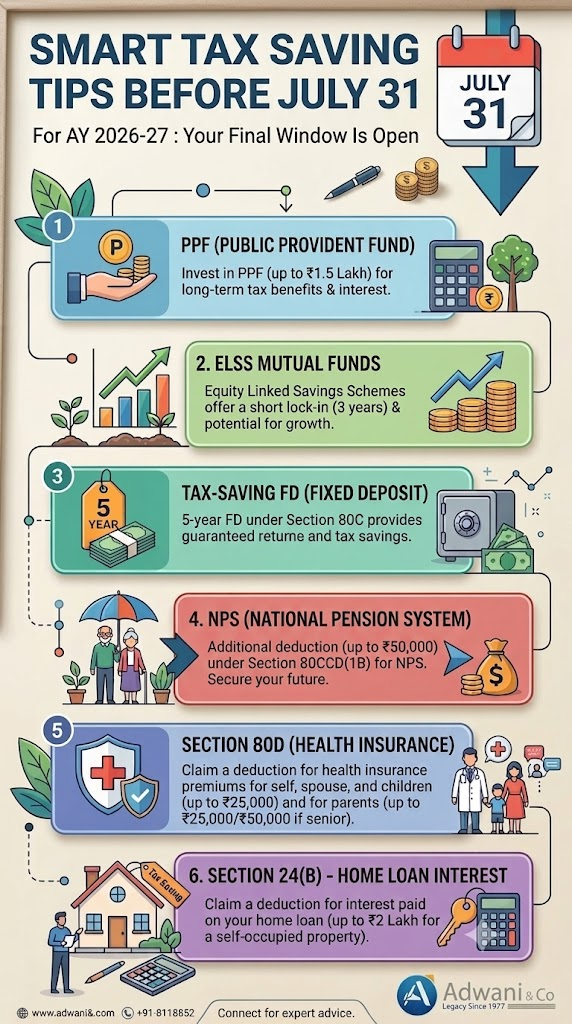
    Also Read:-https://www.adwaniandco.com/blog/tax-saving-tips-before-july-31-2026-27

    That gap is expensive.


    US Stock Investing for Indians: Dividend Tax Rules You Must Understand

    Dividends Are Not Just Income They Come with a Foreign Tax Dimension

    When an Indian investor receives a dividend from a US-listed company, the US government typically withholds tax at source often at 25% under the default withholding rate, or at a reduced rate of 15% if the applicable India-US Double Taxation Avoidance Agreement (DTAA) provisions are properly invoked.

    The dividend then needs to be reported as income in India, where it is taxable at the applicable slab rate. However, the foreign tax withheld in the US can be claimed as a Foreign Tax Credit (FTC) under Section 90 of the Income Tax Act but only if the investor files the correct ITR form and submits Form 67 before the due date.

    Many investors claim the credit informally, file the wrong form, or miss the Form 67 deadline entirely resulting in double taxation that was entirely avoidable.

    US Stock Investing for Indians: Dividend Tax Rules You Must Understand

    For many investors, dividends are the first taxable income generated through US Stock Investing for Indians. While dividend-paying US companies can provide a steady income stream, investors must understand how US withholding tax, Indian income tax rules, and Foreign Tax Credit (FTC) provisions interact to avoid double taxation.

    Currency Movements Can Create a Taxable Gain Even When You Have Made No Profit

    This is one of the most misunderstood aspects of foreign investing.

    Suppose you invest ₹75,000 in a US stock when the exchange rate is USD 1 = ₹75. You hold the stock for a year. The stock’s price in US dollars remains exactly the same. You sell it. No gain in dollar terms.

    But if the exchange rate has moved to ₹85 per dollar at the time of sale, the Indian tax treatment will compute your capital gain in rupees. The currency appreciation itself can generate a taxable capital gain under Indian income tax law even though, from an investment standpoint, you “made nothing.”

    Understanding this mechanism before investing not after can meaningfully influence decisions around timing, holding periods, and tax planning.

    No Transactions Does Not Mean No Reporting Requirement

    A common assumption among foreign investors is: “I didn’t buy or sell anything this year, so I have nothing to report.”

    This is incorrect.

    Under Schedule FA (Foreign Assets) of the Indian Income Tax Return, a resident Indian is required to disclose all foreign assets held at any point during the previous financial year. This includes foreign equity holdings, foreign bank accounts, interests in foreign entities, and foreign insurance or annuity contracts.

    Failure to disclose foreign assets carries significant consequences under the Black Money (Undisclosed Foreign Income and Assets) and Imposition of Tax Act, 2015 a legislation with provisions that are materially more severe than standard income tax penalties.

    The obligation to disclose exists irrespective of transaction activity.

    Schedule FA Reporting Requirements for US Stock Investing for Indians

    Investors engaged in US Stock Investing for Indians should understand that foreign asset disclosure is an annual obligation. Failure to report overseas holdings correctly can attract scrutiny and penalties under applicable reporting laws.

    TCS on Overseas Remittances Recoverable, but Only if You Know How

    When you remit money overseas for investing under the Liberalised Remittance Scheme (LRS), the authorised dealer bank deducts Tax Collected at Source (TCS) under Section 206C(1G) of the Income Tax Act. At present, TCS applies on LRS remittances above specified thresholds.

    This TCS is not a final tax. It is a credit that can be set off against your overall income tax liability or claimed as a refund in your ITR. But it requires correct reporting matching your TCS certificates against your overall tax computation.

    Investors who are unaware of this mechanism often end up with blocked funds or file returns without claiming what is legitimately theirs.

    Estate-Tax Implications of a Large US Portfolio Are Increasingly Relevant

    This is a conversation that almost no investor has until it is too late.

    The United States levies estate tax on assets located in the US, including US-listed equity holdings by non-resident aliens (NRAs). The threshold for US estate tax applicability for NRAs is significantly lower than for US citizens or residents. A portfolio that crosses this threshold without any estate planning framework in place could expose the estate to a substantial US tax liability that Indian heirs were entirely unprepared for.

    This is not a theoretical concern. As Indian participation in US markets grows and portfolio values increase, this becomes a real, material planning issue.

    Key Compliance Checklist for US Stock Investing for Indians

    Before or immediately after you make your first investment in US equities, consider addressing the following:

    • ITR Form Selection: Are you filing the correct ITR form that includes Schedule FA and Schedule FSI for foreign income and assets?
    • Foreign Tax Credit Mechanism: Do you understand how to claim credit for taxes withheld abroad, and are you aware of the Form 67 filing requirement?
    • Capital Gains Classification: Are you clear on whether your gains will be classified as short-term or long-term, and how currency movement is factored into your computation?
    • LRS Compliance: Are you remitting within the annual limit and understanding how TCS deducted by your bank can be recovered?
    • Annual Disclosure: Are you prepared to include all foreign holdings in Schedule FA every year, regardless of whether any transactions occurred?
    • Estate Planning: If your US portfolio is substantial or growing, have you considered the cross-border estate-tax implications?

    None of these are obscure compliance requirements. They are standard obligations that arise the moment you become a holder of foreign assets.


    Key Takeaways

    • US dividend income is taxable in India; foreign tax withheld can be claimed as a credit, but only with correct documentation and timely filings.
    • Currency appreciation can create a taxable capital gain in India even when there is no profit in dollar terms.
    • Resident Indians must disclose all foreign assets annually in Schedule FA this obligation applies even when no transactions have occurred.
    • TCS deducted on LRS remittances is recoverable through ITR filings if correctly reported.
    • A growing US portfolio can trigger US estate-tax considerations for Indian investor estates this requires advance planning, not retrospective action.

    Frequently Asked Questions

    Q1. Which ITR form should be used for US Stock Investing for Indians?

    Resident Indians holding foreign assets must file ITR-2 at a minimum. If they have income from a profession or business, ITR-3 is applicable. Forms ITR-1 and ITR-4 do not contain Schedule FA and are not appropriate for investors with foreign holdings.

    Q2. How does the Foreign Tax Credit (FTC) work for dividends received from US stocks?

    Q1. Which ITR form should a resident Indian file if they have US stock holdings?
    Resident Indians holding foreign assets must file ITR-2 at a minimum. If they have income from a profession or business, ITR-3 is applicable. Forms ITR-1 and ITR-4 do not contain Schedule FA and are not appropriate for investors with foreign holdings.

    Q3. Do US Stock Investing for Indians rules require Schedule FA disclosure every year?

    exemption exists for resident Indians. The Schedule FA disclosure requirement applies to all foreign assets held during the year irrespective of the value of the asset, income earned from it, or whether any transaction occurred. Non-disclosure can attract severe penalties under the Black Money Act.

    Q4. What is TCS on LRS remittances, and how is it different from TDS?

    Collected at Source) under Section 206C(1G) is collected by the bank at the time of remittance abroad under the LRS. It is different from TDS in that it is collected from the remitter (you), not withheld from income. The amount is credited to your PAN and can be set off against your total income tax payable or claimed as a refund but you need to correctly account for it in your ITR.

    Q5. At what portfolio value do US estate-tax rules become relevant for Indian investors?

    The US estate-tax exemption for non-resident aliens (NRAs) is significantly lower than for US citizens. Investors with meaningful US equity holdings should seek professional guidance on this aspect the threshold and applicable rules can change, and the implications for Indian heirs can be substantial without proper advance planning.

    US Stock Investing for Indians offers significant opportunities for wealth creation and diversification. However, tax compliance, foreign asset reporting, FTC claims, Schedule FA disclosures, and estate tax considerations should be addressed proactively to avoid unnecessary penalties and tax costs.

    Connect with Adwani & Co LLP

    If you are investing in US stocks, planning to start, or are uncertain about your existing foreign asset disclosures, income tax filings, or cross-border compliance position, the team at Adwani & Co LLP is available to assist. We support individuals and businesses with international taxation, ITR advisory, foreign asset compliance, and cross-border financial matters.

    Explore our Taxation & Compliance Services | Connect with our Global Advisory Team | Contact Us


    Author

    CA Dipesh Gurubakshani is a Chartered Accountant with Adwani & Co LLP, Pune, specialising in income tax audit, direct taxation, and accounting advisory. He supports clients across statutory compliance, financial reporting, and income tax matters with a focus on accuracy, regulatory adherence, and disciplined execution.

  • How Financial Modeling and FP&A Drive Smarter Cash Flow Decisions for Businesses

    How Financial Modeling and FP&A Drive Smarter Cash Flow Decisions for Businesses

    Most business owners check their bank balance to understand how their company is doing. If the number looks healthy, they assume things are fine. If it looks tight, they start worrying. But here is the problem your bank balance tells you where you’ve been, not where you’re going.

    This is exactly where financial modeling and FP&A (Financial Planning & Analysis) change thegame. Done properly, they turn reactive finance into proactive strategy helping founders, growing businesses, and even established SMEs understand not just what happened, but
    what is likely to happen next and what decisions they should take today.


    What Is Financial Modeling And Why Does It Matter Beyond Large Corporates?

    Financial modeling is often seen as something reserved for investment bankers, analysts, and large enterprises raising capital. In practice, it is one of the most powerful tools
    available to any business owner who wants to run their company with financial clarity.

    A financial model is essentially a structured representation of your business’s financial performance built in a spreadsheet or planning tool that links your revenue
    assumptions, cost structure, working capital needs, and cash position into a single, dynamic view. When built correctly, you can change one assumption (say, a 10% drop in sales) and
    immediately see the downstream impact on gross margin, operating profit, and cash flow.
    For founders and SMEs, this kind of visibility is not a luxury it is a necessity.


    The Real Problem: Running a Business Without a Forward-Looking Financial View

    In the course of working with businesses across sectors and geographies, one pattern appears consistently: companies that struggle with cash flow surprises almost always lack a
    forward-looking financial model. They may have clean books. They may have a good accountant. But without a rolling cash
    flow forecast tied to their actual business assumptions, they are essentially driving with no headlights.


    Here are the situations where this gap becomes most visible:

    • A business wins a large contract but runs out of working capital to deliver it.
    • A founder plans to hire aggressively without stress-testing the payroll impact on runway.
    • A growing company misses a tax payment or vendor obligation because cash timing.
    • An SME takes on debt without understanding whether projected cash flows can comfortably service it.

    None of these situations are inevitable. They are all manageable with the right financial


    Where FP&A Fits In: Connecting the Numbers to Business Decisions

    FP&A, or Financial Planning & Analysis, sits at the intersection of finance and business strategy. It is the function that takes raw financial data and converts it into actionable business insight.

    While financial modeling provides the structure, FP&A provides the ongoing rhythm monthly reviews, budget-vs-actual comparisons, rolling forecasts, and variance analysis that helps leadership understand whether the business is on track and what needs to change.


    Key Components of a Strong FP&A Function

    1. Budgeting and Planning : Setting annual financial targets that are tied to realistic business assumptions not just last year’s numbers with a 10% growth assumption tacked on.
    2. Rolling Cash Flow Forecasts: A 12-week or 13-period rolling cash flow forecast that tracks receivables, payables, payroll, debt service, and tax obligations gives businesses a live view
      of liquidity risk.
    3. Variance Analysis Comparing actual performance against plan and more importantly, understanding why variances occurred and what they signal for the next period.
    4. Scenario Planning What happens if a key client churns? What if raw material costs rise 15%? What if the business grows 30% faster than planned? Scenario modeling answers
      these questions before they become crises.
    5. MIS Reporting: Monthly management information system reports that consolidate performance metrics, KPIs, and financial summaries into a format that supports confident
      decision-making at the leadership level.

    Also Read : FP&A and Excel Automation: The CFO’s Secret Weapon for Smarter Decisions in 2026


    Cash Flow Modeling: The Most Critical Output

    Of all the outputs financial modeling produces, cash flow forecasting is arguably the most critical particularly for startups, SMEs, and businesses in growth phases. Profit on paper does not equal cash in the bank. A business can be profitable on its income
    statement while simultaneously facing a cash crunch particularly if it is growing fast, extending credit to clients, or carrying inventory. This is one of the most misunderstood
    realities in business finance.

    A well-structured cash flow model accounts for:

    • Operating cash flows collections from customers, payments to vendors, payroll, taxes
    • Investing activities capital expenditures, asset acquisitions, technology investments
    • Financing flows loan drawdowns, repayments, equity infusions, dividend payments

    Common Financial Modeling Mistakes That Businesses Should Avoid

    Based on practical experience across multiple client engagements, CA Manish R. Mata has observed that financial modeling errors often stem not from complexity, but from avoidable structural mistakes:

    Overly optimistic revenue assumptions: Models built on best-case scenarios rather than base-case reality tend to mislead more than they guide.

    Ignoring working capital timing: Many models project revenue and profit accurately but fail to account for the time lag between invoicing, collection, and actual cash receipt.

    No sensitivity or scenario analysis : A model that only shows one version of the future is not a planning tool; it is a point-in-time estimate with limited strategic value.
    Disconnected from actual books: A financial model that is not reconciled to actual accounting data quickly becomes irrelevant. The model and the books must speak to each other.
    Not updated regularly : A financial model built six months ago and never refreshed is worse than no model at all. It creates false confidence.


    Who Needs Financial Modeling and FP&A Support?

    At Adwani & Co LLP, we bring hands on FP&A and financial modeling expertise to founders, SMEs, and growing businesses helping them move from reactive decision-making to confident, data driven financial leadership.

    The short answer: any business that wants to make decisions based on financial insight rather than instinct.
    More specifically:

    • Startups preparing for fundraising or investor due diligence
    • SMEs managing growth and needing better cash flow visibility
    • Founders who want monthly financial performance reviews but do not yet have an
    • in-house finance team
    • Businesses raising debt and needing to demonstrate debt serviceability to lenders
    • Companies entering new markets including cross-border expansion where financial risks need to be quantified upfront
    • CPA firms and accounting practices looking to add FP&A and advisory capacity for their own clients

    For many of these businesses, a Virtual CFO engagement which combines financial modeling, FP&A, MIS reporting, and strategic advisory provides the full picture without the cost of a full-time senior hire.


    Key Takeaways:

    • A bank balance tells you where you’ve been; financial modeling tells you where you’re going
    • FP&A is not just for large companies it is a strategic necessity for any business managing growth
    • Cash flow modeling must account for operating, investing, and financing flows not just profit
    • Common modeling errors include overoptimistic assumptions, ignoring working capital timing, and failing to update models regularly
    • Scenario planning transforms a financial model from a static report into a live decision-making tool
    • Virtual CFO services provide FP&A, modeling, and strategic reporting support for businesses that need financial leadership without a full-time hire

    1.What is financial modeling used for in a business context?

    Financial modeling is used to
    project future revenue, costs, profits, and cash flows under different scenarios. It helps
    business owners and leadership teams make informed decisions around hiring, investment,
    expansion, fundraising, and risk management by quantifying the financial impact of key
    decisions before they are made.

    2.How is FP&A different from regular accounting?

    Accounting captures and reports what has
    already happened income, expenses, assets, liabilities. FP&A takes that historical data
    and uses it to plan, forecast, and analyze future performance. While accounting is
    backward-looking, FP&A is forward-looking and directly supports strategic business
    decisions.

    3.Why do startups and SMEs need cash flow forecasting?

    Startups and SMEs often operate
    with thin cash buffers and irregular revenue cycles. A rolling cash flow forecast helps them
    anticipate shortfalls before they occur, plan for tax payments and payroll obligations, and
    avoid the kind of liquidity crises that can destabilize an otherwise healthy business.

    4.What is a Virtual CFO and how does it relate to FP&A?

    A Virtual CFO provides senior
    financial leadership to businesses on a part-time or retainer basis. This typically includes
    setting up and maintaining financial models, delivering monthly MIS and FP&A reports,
    managing budgeting and forecasting cycles, and advising on financial strategy — without the
    cost of a full-time CFO hire.

    5.How often should a financial model be updated?

    A financial model should be updated at
    least monthly reconciled against actual performance, refreshed with updated
    assumptions, and used to reforecast the rolling cash position. For businesses in high-growth
    or capital-intensive phases, more frequent updates may be warranted.

    Conclusion

    Financial modeling and FP&A are not sophistication tools reserved for large companies with dedicated finance teams. They are practical, commercially essential capabilities that any
    business from a seed-stage startup to a mid-market SME can and should leverage to make smarter decisions. The difference between a business that anticipates its cash crunch and fixes it in advance, and one that discovers it at month-end, often comes down to one thing: financial visibility. A well-built model, maintained with discipline and reviewed regularly, provides exactly that. As the pace of business accelerates and the operating environment grows more complex, the businesses that invest in their financial planning infrastructure will consistently
    outperform those that rely on instinct and historical numbers alone.

    If your business is looking to build stronger financial systems, improve cash flow visibility, or integrate FP&A into your monthly management reporting, the team at Adwani & Co LLP would be happy to connect. From financial modeling and Virtual CFO support to MIS reporting and cross-border advisory, we bring practical expertise to help your business run with greater financial clarity.

    Disclaimer: Adwani & Co LLP is a multi-disciplinary professional services platform. The blogs shared are for educational and informational purposes only and are intended to promote
    awareness around finance, accounting, taxation, reporting, and business advisory topics. Nothing contained herein should be construed as solicitation or advertisement of professional services. Where professional services are required under applicable laws or regulations, such services are rendered in accordance with relevant professional and regulatory requirements. The content has been reviewed for technical accuracy by professionals associated with Adwani & Co LLP.

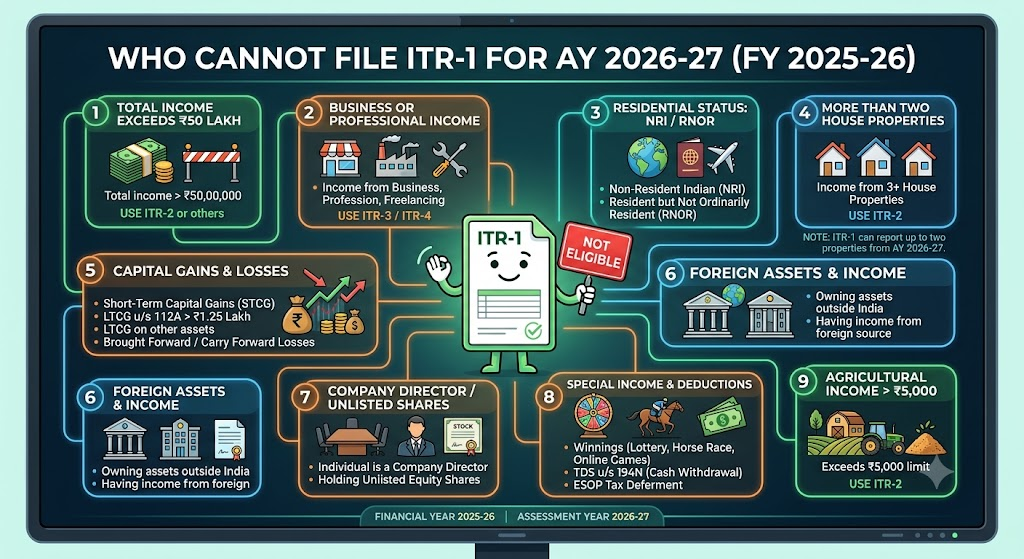
    Author
    CA. Manish R. Mata Practising In India (Ex – PwC),  At Adwani & Co LLP leads the International Accounting & Tax Support vertical, delivering structured execution assistance to US CPA firms and overseas businesses.

  • Smart Tax Saving Tips Before July 31 for AY 2026-27 : Your Final Window Is Open

    Smart Tax Saving Tips Before July 31 for AY 2026-27 : Your Final Window Is Open

    The Deadline That Most Taxpayers Ignore Until It’s Too Late

    Every year, it happens the same way. A taxpayer who earned well, invested wisely, and paid their TDS on time ends up with a higher tax bill than they should have not because they broke any rules, but because they didn’t plan within the rules before the window closed.

    That window closes on July 31, 2026.

    This is the ITR filing last date for AY 2026-27 the hard deadline set by the Income Tax Department of India under Section 139(1) of the Income Tax Act, 1961. Whether you’re salaried, a freelancer, a business owner, or an investor with capital gains, these final weeks before July 31 are your last legitimate opportunity to optimize your tax position for FY 2025-26.

    This guide covers the most powerful, actionable tax saving tips before July 31 for AY 2026-27 backed by real numbers, practical examples, and the kind of strategic clarity that most generic tax articles miss entirely.


    Why Tax Saving Before July 31 for AY 2026-27 Matters More Than Ever

    Filing on time is no longer just about avoiding the late fee under Section 234F (up to ₹5,000). The consequences of filing late or filing incorrectly now carry deeper implications.

    The Income Tax Department’s data infrastructure has expanded significantly. Through the Annual Information Statement (AIS), the department now receives real-time data from banks, brokers, mutual fund houses, property registrars, and even the GST Portal via cross-system data sharing. Credit card transactions, cash deposits, and F&O trading activity are all tracked and matched against your ITR.

    Filing with errors or missing deductions in this environment means:

    • Delayed or rejected refunds due to TDS credit mismatches
    • Income tax notices triggered by AIS-ITR discrepancies
    • Loss of carry-forward rights for F&O losses and capital losses
    • Missed deduction claims that can never be retroactively corrected once the deadline passes

    The most effective tax saving strategy for AY 2026-27 begins not on July 30th, but right now.

    Tax Saving Tip 1 : Old vs New Tax Regime: The Most Important Choice of AY 2026-27

    If there is one tax saving tip before July 31 for AY 2026-27 that carries more financial weight than all others combined, it is this: choose your tax regime deliberately, not by default.

    The new tax regime for FY 2026-27 offers zero tax on income up to ₹12 lakh after the Section 87A rebate, along with a simplified slab structure and a standard deduction of ₹75,000 for salaried employees and pensioners a figure significantly improved from the prior ₹50,000 available under the old regime.

    The old tax regime preserves the full deduction ecosystem. This matters enormously for taxpayers who have:

    • Section 80C investments : ELSS, PPF, LIC premium, home loan principal, NSC, tuition fees (up to ₹1.5 lakh)
    • Section 80D : Health insurance premiums (up to ₹25,000 for self/family; ₹50,000 for senior citizen parents)
    • Section 24(b) : Home loan interest deduction (up to ₹2 lakh for self-occupied property)
    • HRA exemption : For salaried employees living in rented accommodation
    • Section 80CCD(1B) : Additional ₹50,000 for NPS contributions, above the 80C ceiling

    Practical Comparison Example:

    ScenarioSalaried, Income ₹14 lakhNew Regime TaxOld Regime Tax
    Standard deduction₹75,000₹75,000₹50,000
    Section 80C₹1.5 lakhNot applicableClaimed
    Section 80D₹25,000Not applicableClaimed
    Home loan interest₹1.5 lakhNot applicableClaimed
    Effective taxable income~₹13.25L~₹10.5L
    Approximate tax~₹1,17,500~₹82,500

    In this example, the old regime saves approximately ₹35,000. But for someone without these deductions, the new regime wins decisively. There is no universal answer only a calculated one.

    As Dr. Haresh Adwani, PhD in Commerce and law graduate, founding partner of Adwani and Company, puts it: “The regime decision is not a checkbox. It is a financial calculation. We see taxpayers every year who lock in the wrong regime because they assumed not because they calculated.”

    Read :Old vs New Tax Regime2025: Stop Guessing, Start Calculating

    Tax Saving Tip 2 : Claim Every Deduction Before the July 31 Deadline

    Many taxpayers who opt for the old regime still underclaim deductions not because they’re ineligible, but because documentation is incomplete at the time of filing. Here’s the fullSection 80C deductions checklist for AY 2026-27:

    High-Impact Deductions to Capture Before July 31

    Section 80C : ₹1.5 lakh ceiling (Old Regime only): ELSS mutual funds, PPF, LIC premium, EPF (employee’s share), NSC, 5-year tax-saving FD, children’s tuition fees, home loan principal repayment

    Section 80D : Health Insurance: ₹25,000 for self/spouse/children + ₹50,000 for senior citizen parents. Preventive health check-up expenses of up to ₹5,000 are included within these limits.

    Section 80CCD(1B) : NPS: ₹50,000 additional over and above 80C. For a taxpayer in the 30% bracket, this alone reduces tax by ₹15,600.

    Section 24(b) : Home Loan Interest: Up to ₹2 lakh on a self-occupied property. For let-out property, full interest is deductible (subject to the ₹2 lakh set-off cap).

    HRA Exemption: Calculated as the least of: actual HRA received, rent paid minus 10% of basic salary, or 50%/40% of basic salary (metro/non-metro cities). Ensure rent receipts are ready and landlord’s PAN is available if annual rent exceeds ₹1 lakh.Learn more about our ITR Filing Service to ensure every deduction is accurately captured before the filing deadline.


    Tax Saving Tip 3 : Reconcile AIS and Form 26AS Before Filing ITR

    One of the most impactful and most skipped tax saving actions before July 31 for AY 2026-27 is a thorough pre-filing reconciliation of your AIS (Annual Information Statement) and Form 26AS.

    These documents show what third parties — banks, employers, brokers, mutual funds — have reported to the Income Tax Department against your PAN. Mismatches between your ITR and the AIS cause:

    • Delayed refund processing
    • Defective return notices
    • Demand notices for income you didn’t actually earn (due to PAN errors in the AIS)

    Importantly, TDS already deducted from your interest income, rent received, or capital gains transactions is a prepaid tax. If those credits aren’t correctly claimed in your ITR, you’re effectively overpaying the government and getting nothing in return.

    Dr. Haresh Adwani notes: “Every filing at Adwani and Company begins with a full AIS-Form 26AS review. It’s the foundation. Without it, you’re filing blind.”


    Tax Saving Tip 4 : Capital Gains Reporting: LTCG, STCG & F&O for AY 2026-27

    LTCG and STCG tax on shares and mutual funds for AY 2026-27 has been restructured by the Union Budget 2024 amendments. Understanding the current rates is a critical income tax saving strategy before you file.

    Revised Capital Gains Tax Rates

    Asset TypeHolding PeriodTax Rate (Post-Budget 2024)
    Listed equity / equity MFs< 12 months (STCG)20% flat
    Listed equity / equity MFs≥ 12 months (LTCG > ₹1.25L)12.5% (no indexation)
    Debt mutual funds (post Apr 2023)AnyAs per income slab
    Property / unlisted shares≥ 24 months (LTCG)12.5% (no indexation)

    Practical Example : LTCG Planning:

    A taxpayer sold equity mutual fund units in January 2026 with a long-term capital gain of ₹2,80,000. The first ₹1,25,000 is fully exempt. The remaining ₹1,55,000 is taxed at 12.5%, resulting in a tax liability of ₹19,375 compared to ₹46,500 if mistakenly taxed at 30%.

    F&O Loss Carry Forward : A Time-Sensitive Tax Benefit:

    Losses from Futures & Options trading are treated as non-speculative business losses. These can be set off against other business income and carried forward for up to 8 years — but only if the ITR is filed by July 31. Filing late permanently forfeits this benefit under Section 80 of the Income Tax Act.

    Read our detailed guide on F&O Loss Tax Benefits and Carry Forward


    Tax Saving Tip 5 — Freelancers and Business Owners: Presumptive Taxation for AY 2026-27

    For freelancers, consultants, and small business owners, presumptive taxation under Section 44AD and 44ADA in 2026 remains one of the most powerful legal tax reduction tools available.

    Section 44ADA (for professionals doctors, architects, lawyers, CAs, engineers):

    • Declare 50% of gross receipts as taxable income
    • No requirement to maintain books of accounts (for receipts up to ₹75 lakh)
    • Significantly simplifies ITR filing for freelancers in India 2026

    Section 44AD (for small businesses):

    • Declare 8% of turnover (6% for digital transactions) as income
    • Available for turnovers up to ₹3 crore

    This approach eliminates the complexity of proving individual expenses and reduces effective tax significantly for service professionals. Learn more about our ITR Filing for Freelancers.


    Tax Saving Tip 6 : GST Compliance Before July 31 Reduces Risk and Penalty

    Tax saving isn’t limited to income tax. For business owners and professionals, GSTR-3B filing compliance in 2026 directly impacts cash flow and audit risk.

    The GST Portal now uses AI driven cross-verification to match GSTR-1 against GSTR-3B, flag input tax credit eligibility 2026 mismatches, and identify GSTR-2B reconciliation gaps. Discrepancies between these returns and your income tax filings can trigger both a GST scrutiny notice and an income tax inquiry simultaneously as both systems now share data.

    Key GST actions before July 31:

    • Reconcile GSTR-2B with your purchase register to ensure no ITC mismatch notice exposure
    • Ensure GSTR-3B figures match GSTR-1 for all prior periods
    • Clear any outstanding GST return late fee penalties to maintain clean compliance history
    • Update GST registration records if business address, directors, or turnover category has changed

    Learn more about our GST Compliance Service


    Tax Saving Tip 7 : Advance Tax Planning for FY 2026-27

    If your income includes freelancing fees, business profits, capital gains, rental income, or F&O trading, advance tax compliance for FY 2026-27 is your responsibility and the next due date matters for AY 2027-28 planning.

    InstallmentDue DateCumulative % of Tax
    1st (already passed)June 15, 202615%
    2ndSeptember 15, 202645%
    3rdDecember 15, 202675%
    4thMarch 15, 2027100%

    Taxpayers who underestimate income — especially those with significant capital gains from equity or F&O profits — frequently end up with interest under Sections 234B and 234C. Reviewing your expected FY 2026-27 income after filing the AY 2026-27 ITR is proactive planning.

    Read our Advance Tax Due Dates Guide FY 2026-27


    Key Takeaways : Tax Saving Tips Before July 31 for AY 2026-27

    • July 31, 2026 is the last date to file ITR for AY 2026-27 late filing attracts ₹5,000 penalty under Section 234F
    • ✅ Regime selection (old vs new) must be calculated, not assumed it’s the single biggest tax lever available
    • ✅ Standard deduction of ₹75,000 is available under the new regime for salaried individuals
    • ✅ AIS and Form 26AS reconciliation is mandatory before filing it protects your refund and prevents notices
    • ✅ LTCG on equity above ₹1.25 lakh is taxed at 12.5% — report it correctly in Schedule CG
    • ✅ F&O losses can only be carried forward if ITR is filed by July 31 filing late forfeits this right permanently
    • ✅ Freelancers and professionals can dramatically reduce tax via Section 44ADA presumptive taxation
    • ✅ GST compliance gaps before July 31 can trigger cross-system notices clean both systems together

    Frequently Asked Questions

    Q1. What is the last date to file ITR for AY 2026-27?

    ITR filing last date for AY 2026-27 is July 31, 2026 for individuals, HUFs, and non-audit cases. Filing after this deadline attracts a late fee of up to ₹5,000 under Section 234F, and you permanently lose the right to carry forward certain losses.

    Q2. Which tax regime saves more money in AY 2026-27?

    It depends on your deduction profile. The new regime is advantageous if your deductions are limited. The old regime wins when significant 80C, home loan interest, HRA, 80D, and NPS deductions are available. Always calculate both before making the selection.

    03.Can F&O losses be carried forward if I miss the July 31 deadline?

    No. Under Section 80 of the Income Tax Act, business losses including F&O non-speculative losses can only be carried forward if the return is filed on or before the due date. Missing July 31 permanently forfeits this benefit for FY 2025-26 losses.

    Q4. What happens if there’s a mismatch between AIS and my ITR?

    AIS ITR mismatches can result in defective return notices, delayed refund processing, or demand notices. Always reconcile your AIS and Form 26AS data before filing, and raise a correction request on the AIS portal if you find data errors.

    Q. Can salaried employees and freelancers file ITR themselves?

    Yes, both can file ITR online via the e-filing portal. However, freelancers with presumptive taxation claims, capital gains, or multiple income sources benefit significantly from professional review especially to ensure correct deduction claims and avoid defective return notices.

    Conclusion : Your Tax Saving Window Before July 31 for AY 2026-27 Won’t Wait

    The best time to act on tax saving tips before July 31 for AY 2026-27 was three months ago. The second-best time is today.

    Every element covered in this guide regime selection, deduction maximization, AIS reconciliation, capital gains reporting, GST compliance, and advance tax planning is available to every taxpayer right now. The difference between those who benefit from these provisions and those who don’t is rarely knowledge. It’s action.

    The Income Tax Department has made compliance more transparent and more consequential than ever. Filing with accuracy, on time, with every legitimate deduction claimed isn’t just good practice it’s the most financially rational thing a taxpayer can do before July 31, 2026.

    About the Author
    Dr. Haresh Adwani
    Ph.D. in Commerce | Law Graduate | Managing Partner, Adwani & Co LLP Dr. Haresh Adwani holds a Ph.D. in Commerce and is a qualified Law graduate with over two decades of hands-on experience in GST advisory, direct taxation, and statutory compliance for businesses across

    Legal Disclaimer: This article is published for informational and educational purposes only. Nothing contained herein constitutes legal, financial, or tax advice, nor should it be treated as a substitute for professional consultation tailored to your specific circumstances. Tax laws, rates, and provisions are subject to change; readers are strongly advised to consult a qualified Chartered Accountant or tax advisor before acting on any information in this article.

    All content is original. References to government portals and statutory provisions are paraphrased for educational purposes in compliance with fair use principles. No content has been reproduced from third-party sources.

    Don’t leave money on the table this July 31.

    👉 Connect with Adwani and Company today for expert guidance on tax saving strategies for AY 2026-27. Visit adwaniandco.com or schedule a consultation before the deadline closes.

  • Income Tax Updates AY 2026-27: New ITR Forms Guide

    Income Tax Updates AY 2026-27: New ITR Forms Guide

    Income Tax Updates AY 2026-27
    Income Tax Updates AY 2026-27

    Key Highlights of AY 2026-27

    • New Income Tax Act, 2025 effective from 1 April 2026
    • ITR-1 now allows up to 2 house properties
    • LTCG up to ₹1.25 lakh allowed in ITR-1
    • Aadhaar Enrolment ID no longer valid
    • Form 16 renamed as Form 130
    • Dual mobile numbers and email IDs mandatory
    • New drop-down deduction reporting system

    A New Tax Era Begins Are You Ready?

    If you have been putting off your return planning, here is the signal you needed: the Income Tax Updates AY 2026-27 represent the most comprehensive overhaul of the Indian income tax system in recent memory. From revamped ITR forms to entirely renamed statutory documents, every taxpayer salaried employee, business owner, or professional will feel the impact this season. Understanding these changes now is not just smart; it is essential to avoiding penalties and missed deadlines.

    As per the official communication from the Income Tax Department of India, the department has released the fully revamped ITR forms ITR-1 through ITR-7 under the new Income Tax Act, 2025 and Income Tax Rules, 2026, effective from 1 April 2026. This is not a cosmetic update. The structural changes in compliance, deduction reporting, Aadhaar validation, and capital gain disclosures are significant and being unaware of them could cost you dearly.

    Quick FactThe Income Tax Department has revamped ITR-1 to ITR-7 under a brand-new compliance framework effective from 1 April 2026. Both AY 2026-27 (for past income) and TY 2026-27 (for current compliance) are now managed through the same e-filing portal simultaneously.

    In this detailed guide, Pavan Adwani– Corporate Advisory & Tax Compliance Lead at Adwani & Co LLP, with over two decades of hands-on practice since 2002 breaks down every critical change so you can file with confidence, avoid penalties, and stay fully compliant under the new regime.

    The New Income Tax Framework: Act 2025 & Rules 2026

    The Income Tax Act, 2025 replaces the decades-old Income Tax Act, 1961 in its compliance and procedural architecture. While the substantive tax rates remain broadly similar, the procedural rules governing income tax updates AY 2026-27 filings have been substantially modernised. The new Income Tax Rules, 2026 introduce precision-driven reporting, mandatory digital validation, and a cleaner form architecture.

    According to the Income Tax Department’s official notification, the changes aim to reduce ambiguity in reporting, streamline deduction claims, and improve the accuracy of advance reconciliation between TDS credits and actual income declarations. incometax.gov.in

    With over 22 years of structured, process-oriented advisory experience, Pavan Adwani notes that procedural changes consistently catch taxpayers off-guard. “Many clients understand what they owe but the new rules change how they must report it. One incorrect drop-down selection in deductions, or an outdated Aadhaar format, and your return gets flagged as defective. That triggers notices, delays, and unnecessary stress,” he explains.

    Also Read:

    https://itradvisor.in/blog/itr-1-vs-itr-2-vs-itr-3-vs-itr-4

    Critical ITR Filing Due Dates for Income Tax AY 2026-27

    Missing a due date under the income tax updates AY 2026-27 framework can attract late-filing fees under Section 234F, interest liability, and in some cases, loss of deductions. Mark your calendar with these non-negotiable deadlines:

    31 July 2026

    Salaried individuals, pensioners & non-audit casesITR-1 & ITR-2

    31 August 2026

    Non-audit businesses & professionalsITR-3 & ITR-4

    31 October 2026

    Businesses or professions requiring a tax auditITR-3, ITR-5 & ITR-6

    30 November 2026

    Transfer pricing cases Applicable Assessees

    Pro Tip from Adwani & Co LLPDo not wait until July. Start reconciling your AIS (Annual Information Statement), TDS credits, and capital gain statements now. The new forms require more granular data, and gathering it at the last minute invariably leads to errors and missed deductions.

    ITR Forms at a Glance: Which Form Is Right for You?

    One of the most critical aspects of the income tax updates AY 2026-27 is selecting the correct ITR form. Filing the wrong form is treated as a defective return by the department. Here is a comprehensive overview of all seven forms:

    FormSuitable For
    ITR-1 (SAHAJ)Resident Individuals Salary, pension, up to 2 house properties, other sources, LTCG up to ₹1.25 lakh (Section 112A)
    ITR-2Individuals & HUFs Capital gains above limit, multiple HPs, foreign assets or foreign income
    ITR-3Individuals & HUFs Business or profession income including F&O and intraday trading
    ITR-4 (SUGAM)Individuals, HUFs, Firms Presumptive income under Sections 44AD, 44ADA, 44AE up to ₹50 lakh
    ITR-5Firms, LLPs, AOPs Entities other than individuals, HUFs, companies or charitable trusts
    ITR-6Companies All corporate entities not claiming exemption under Section 11
    ITR-7Trusts & Institutions Persons/companies required to furnish returns under Sections 139(4A)/(4B)/(4C)/(4D)

    Key Income Tax Updates in ITR-1 (SAHAJ) & ITR-4 (SUGAM) for AY 2026-27

    Among all the income tax updates AY 2026-27, the changes to the two most commonly used forms ITR-1 and ITR-4 will affect the largest number of taxpayers. Here is a detailed breakdown of what has changed:

    1. LTCG Relief Now Available in ITR-1

    For the first time, taxpayers with Long-Term Capital Gains (LTCG) under Section 112A of up to ₹1.25 lakh can report them directly in ITR-1 (SAHAJ) provided there are no brought-forward or carry-forward losses from previous years. This is a significant simplification that saves lakhs of small investors from filing the more complex ITR-2.Capital Gains Tax Information

    2. Two House Properties Now Permitted in ITR-1

    Previously, owning more than one house property meant moving to ITR-2. Under the new rules, individuals with up to two house properties can continue using the simpler ITR-1 form. This single change makes ITR-1 accessible to a much wider segment of the middle-class taxpayer base.

    3. Drop-Down Deduction Selection No More Free-Text

    Deduction claims under Sections 80C to 80U must now be selected via a mandatory drop-down menu with exact sub-sections. This requires taxpayers to know precisely which sub-section their investment falls under for example, Section 80C(a) for EPF contributions versus 80C(b) for PPF deposits.

    4. Aadhaar Enrolment ID Is No Longer Valid

    A critical compliance point under the income tax updates AY 2026-27: the 28-digit Aadhaar Enrolment ID is no longer accepted on the e-filing portal. Only the 12-digit Aadhaar Number will be accepted. Ensure your Aadhaar is linked to your PAN before filing.

    5. Dual Contact Details Are Now Mandatory

    The new ITR forms require both a primary and a secondary contact two email addresses and two mobile numbers. This is part of the department’s push to improve official communication and reduce undelivered notices.

    Action Checklist Before Filing(1) Confirm your 12-digit Aadhaar is linked to PAN. (2) Identify the exact 80C–80U sub-section for each deduction. (3) Prepare two valid email IDs and mobile numbers. (4) Check your LTCG if under ₹1.25 lakh and no losses, you may use ITR-1. (5) Confirm whether you qualify for ITR-1 with your two house properties.

    Major Renaming of Statutory Forms: Income Tax Rules, 2026

    One of the lesser-known but highly impactful changes in the income tax updates AY 2026-27 is the comprehensive renaming of statutory forms. Many compliance documents that professionals and employers have used for years now carry entirely new form numbers under the Income Tax Rules, 2026. Submitting a document using its old name may cause confusion or rejection in tax proceedings.

    130 New Form – Earlier: Form 16

    Employer Salary TDS Certificate

    168 New Form – Earlier: Form 26AS

    Tax Credit Statement (TDS/TCS)

    121 New Form – Earlier: Form 15G/15H

    Declaration for Non-Deduction of TDS on Interest.

    26 New Form – Earlier: Form 3CA/3CB/3CD

    Unified Tax Audit Report

    141 New Form – Earlier: Forms 26QB/26QC/26QD/26QE

    Property & Rent TDS Reporting

    Pavan Adwani strongly advises all HR teams, employers, and compliance officers to immediately update their internal document templates to reflect the new form numbers. “Using Form 16 instead of Form 130, or Form 26AS instead of Form 168, in a notice reply or regulatory submission can create avoidable complications. Update your templates now not after the notices arrive,” he advises from his two-plus decades of GST and income-tax advisory practice.

    Two Systems, One Portal: AY vs TY – Know the Difference

    A uniquely confusing aspect of the income tax updates AY 2026-27 is that the e-filing portal now simultaneously supports two distinct compliance frameworks. Many taxpayers are unsure which year to select at the time of filing. Here is the clear, practical distinction:

    • AY 2026-27 :- Select this to report income earned during FY 2025-26 (1 April 2025 to 31 March 2026). This is your standard annual income tax return for the past financial year.
    • TY 2026-27 :- Select this for compliance requirements tracking current transactions and ongoing obligations under the new Income Tax Act, 2025, starting from 1 April 2026 onwards.

    Common Mistake AlertSelecting TY 2026-27 when you intend to file your regular annual return will result in a misclassified submission. Always choose AY 2026-27 for reporting your FY 2025-26 income. When in doubt, contact the Adwani & Co LLP team before submitting.

    Practical Example: Choosing the Right ITR Under the New Rules

    To make the income tax updates AY 2026-27 more tangible, consider this real-world scenario that the advisory team at Adwani & Co LLP frequently encounters:

    Meet Rahul – Salaried IT Professional, Pune

    Rahul earns ₹14.5 lakh per annum from salary, owns two residential flats (one self-occupied, one let out), and sold some mutual fund units in January 2026, generating LTCG of ₹92,000 under Section 112A. He has no brought-forward losses.

    Salary Income₹14,50,000
    Rental Income (Flat 2, after standard deduction)₹1,80,000
    LTCG under Section 112A₹92,000
    Section 80C Deductions (EPF + PPF)₹1,50,000
    Standard Deduction (Salaried)₹75,000
    ✅ Recommended Form: ITR-1 (SAHAJ) – qualifies under new AY 2026-27 rules (2 HPs now permitted + LTCG under ₹1.25 lakh)

    Under the pre-2026 rules, Rahul would have been compelled to file ITR-2 due to his two house properties. The new income tax updates AY 2026-27 now allow ITR-1 saving significant time and reducing complexity for millions of taxpayers like him.

    Professional Advisory: What Pavan Adwani Recommends for AY 2026-27

    With over two decades of structured tax advisory experience spanning GST, income-tax consultation, corporate regulatory compliance, and statutory documentation  Pavan Adwani of Adwani & Co LLP offers the following strategic guidance for taxpayers navigating the income tax updates AY 2026-27:

    1. Reconcile Your AIS and TDS Credits Without Delay

    The Annual Information Statement (AIS) available on the e-filing portal now captures a far wider range of transactions including mutual fund redemptions, dividend income, rent receipts, and foreign remittances. Any mismatch between your AIS and your ITR can trigger a scrutiny notice. Pavan Adwani recommends downloading your AIS today and reconciling it against your own records before the filing rush begins.

    2. Verify All Capital Gain Statements from Brokers and AMCs

    The new drop-down mechanism requires precise classification of capital gains by holding period and asset type. Pull your consolidated account statement (CAS) from CDSL or NSDL, and obtain capital gain statements from each mutual fund house separately. AMCs such as CAMS and KFintech provide structured reports that can be directly referenced for ITR preparation.

    3. Maintain Supporting Documentation for Every Deduction Claim

    Given the new mandatory sub-section-level drop-down for 80C–80U deductions, ensure you retain all supporting documents EPF statements, PPF passbooks, LIC premium receipts, home loan certificates, school fee receipts, and medical bills. In any scrutiny proceeding, the burden of proof rests with the taxpayer. Taxpayers can review and download their AIS directly from the official Income Tax portal.

    4. Update PAN–Aadhaar Linking

    If your PAN is not yet linked to your 12-digit Aadhaar, your ITR will be treated as invalid and TDS refunds may be withheld. The e-filing portal will not accept a 28-digit Aadhaar Enrolment ID under any circumstances for AY 2026-27. Verify your linking status at incometax.gov.in before attempting to file. PAN-Aadhaar Linking Portal

    5. Evaluate Whether Presumptive Taxation Applies to Your Business

    If you run a small business or are a professional with gross receipts under ₹50 lakh, ITR-4 (SUGAM) under the presumptive taxation scheme (Sections 44AD/44ADA/44AE) may substantially simplify your compliance burden. Pavan Adwani and his team regularly guide business clients through eligibility evaluation ensuring they are not over-filing or under-utilising available simplifications.

    🏛 Advisory Note from Pavan Adwani“The new rules bring in much-needed procedural precision. But they also shrink the margin for error. Taxpayers who reconcile their AIS early, maintain clear documentation, and work with a structured compliance partner will find this season far smoother than those who rush at the deadline. Our team at Adwani & Co LLP has already begun proactive planning for all our clients for AY 2026-27.”

    Frequently Asked Questions Income Tax Updates AY 2026-27

    1. What are the major income tax updates for AY 2026-27?

    The major income tax updates AY 2026-27 include: revamped ITR forms (ITR-1 to ITR-7) under the Income Tax Act, 2025 and Rules, 2026; LTCG up to ₹1.25 lakh reportable in ITR-1; two house properties now allowed in ITR-1; mandatory drop-down selection for 80C–80U deductions; rejection of 28-digit Aadhaar Enrolment IDs; mandatory dual contact details; and comprehensive renaming of statutory forms for example, Form 16 is now Form 130, and Form 26AS is now Form 168.

    2. What is the last date to file ITR for AY 2026-27?

    For salaried individuals and non-audit cases (ITR-1 and ITR-2): 31 July 2026. Non-audit businesses and professionals (ITR-3 and ITR-4): 31 August 2026. Businesses requiring a tax audit (ITR-3, ITR-5, ITR-6): 31 October 2026. Transfer pricing cases: 30 November 2026.

    3. Can a salaried person with two houses use ITR-1 for AY 2026-27?

    Yes. Under the income tax updates AY 2026-27, individuals with up to two house properties can now file ITR-1 (SAHAJ), provided their other income conditions are met salary or pension income, LTCG under ₹1.25 lakh under Section 112A with no carry-forward losses. This is a key change from prior years where two house properties required ITR-2.

    4. What has Form 26AS been renamed to under the new income tax rules 2026?

    Under the Income Tax Rules, 2026, Form 26AS (Tax Credit Statement) has been renamed Form 168. Similarly: Form 16 is now Form 130, Form 15G/15H is now Form 121, the Tax Audit Report (Form 3CA/3CB/3CD) is now Form 26, and the property/rent TDS forms (26QB/26QC/26QD/26QE) are consolidated as Form 141.

    5. What is the difference between AY 2026-27 and TY 2026-27 on the e-filing portal?

    AY 2026-27 is selected for reporting your income earned during FY 2025-26 (1 April 2025 to 31 March 2026) your standard annual return. TY 2026-27 is for compliance requirements under the new Income Tax Act, 2025, tracking transactions from 1 April 2026 onwards. Most individual taxpayers filing their regular return should select AY 2026-27.

    Conclusion: Plan Early, File Smart, Stay Compliant

    The income tax updates AY 2026-27 are not incremental tweaks they represent a structural transformation of India’s tax compliance framework. From the revamped ITR forms under the Income Tax Act, 2025 and Rules, 2026, to renamed statutory documents, tightened Aadhaar validation requirements, and new capital gain reporting flexibility in ITR-1, every taxpayer faces a meaningfully different filing experience this year.

    The good news is that with the right preparation reconciling your AIS early, selecting the correct ITR form, updating your Aadhaar PAN linkage, and understanding the new form names the process can be entirely manageable. What separates a smooth filing season from a stressful one is almost always preparation and professional support.

    As Pavan Adwani consistently emphasises with clients: “Tax compliance is not about fear it is about being informed, being organised, and having the right partner in your corner. With 22+ years of practice across GST, income-tax, and corporate compliance, our team at Adwani & Co LLP is already at work preparing every client for what AY 2026-27 demands. The earlier you start, the stronger your position.”

    Ready to File with Confidence?

    Get expert guidance on the income tax updates AY 2026-27 from Pavan Adwani and the professional team at Adwani & Co LLP Trusted Advisors. Lasting Value. Pimpri, Pune.Connect with Adwani & Co LLP Today →

    Author

    Pavan Adwani – Corporate Advisory, Tax Compliance & Regulatory Management.

    He is actively involved in advising business entities on corporate compliance, tax management, and regulatory frameworks, with a structured and process-oriented approach.

  • How a Calibri Font Destroyed a ₹68.7 Lakh Tax Fraud Claim

    How a Calibri Font Destroyed a ₹68.7 Lakh Tax Fraud Claim

    Dr. Haresh Adwani, May 2026, 9 min read

    A taxpayer walked into the Income Tax Department in Hyderabad believing their paperwork was airtight. They had ₹68.7 lakh in claimed deductions, a pile of improvement bills spanning six years, and a taxable gain reduced to an almost negligible ₹24,774. Everything looked fine until an officer noticed one small, damning detail: the font.

    In what has become a landmark example of how tax fraud detection in India is growing increasingly sophisticated, the Calibri font tax fraud case from Hyderabad is a stark reminder that document authenticity matters more than ever. Whether you are a business owner, a salaried professional, or an NRI dealing with property transactions, this case has lessons that could protect you or expose you.

    At Adwani and Company, led by Dr. Haresh Adwani  a PhD holder in Commerce and a law graduate with deep expertise in direct taxation we have seen firsthand how easily avoidable mistakes can trigger scrutiny. Let us walk you through exactly what happened, why it matters, and what you must do to stay compliant.


    The Calibri Font Tax Fraud Case: What Actually Happened

    The case centers on a property transaction in Hyderabad. A taxpayer sold a residential property for ₹1.4 crore. Under the provisions of the Income Tax Act, 1961, Long-Term Capital Gains (LTCG) on the sale of property held for more than two years are taxable. However, the law also permits deductions for cost of improvement genuine expenditures made to enhance the value of the property.

    The taxpayer submitted a set of improvement bills dated between 2002 and 2008, collectively totaling ₹68.7 lakh. After applying these as deductions against the sale proceeds, the taxable long-term capital gain was reduced to a mere ₹24,774. On paper, this was a legitimate, well-structured claim. In practice, it was a fabrication and an expensive one.

    The Income Tax Department’s scrutiny officer flagged this anachronism. Faced with an undeniable factual inconsistency, the taxpayer withdrew the fraudulent claim and paid the correct tax amount. There was no lengthy litigation the font spoke for itself.


    Understanding Long-Term Capital Gains and Calibri Font Tax Fraud Risks

    To understand the full implications of this Calibri font tax fraud, you need to understand how LTCG deductions work under Indian tax law. According to the Income Tax Department of India, the taxable capital gain on the sale of a long-held asset is calculated as:

    Taxable LTCG = Sale Price (Indexed Cost of Acquisition + Indexed Cost of Improvement)

    The cost of improvement covers genuine renovation, reconstruction, or structural enhancement expenditures that increase the asset’s value. These must be supported by original bills, receipts, and in many cases corroborating evidence such as contractor agreements or building permits.

    As Dr. Haresh Adwani frequently advises clients at Adwani and Company: “The law does not punish genuine claims. It punishes fabricated ones. The problem is that many taxpayers do not preserve original records and then attempt to reconstruct them at the time of sale often with modern tools that inadvertently leave digital fingerprints.”

    Learn more about our Ultimate Financial Modeling to Normalize Business Valuation in India


    Real Numerical Example: How the ₹68.7 Lakh Calibri Fraud Unravelled

    Practical Illustration

    Property Sale Tax Calculation — Fraudulent vs. Legitimate

    ItemFraudulent ClaimActual (After Withdrawal)
    Sale Price of Property₹1,40,00,000₹1,40,00,000
    Indexed Cost of Acquisition₹71,25,226₹71,25,226
    Claimed Improvement Costs₹68,70,000 (fake)₹0
    Taxable Long-Term Capital Gain₹24,774₹68,74,774
    Tax Liability @ 20% (approx.)≈ ₹4,955≈ ₹13,74,955

    Note: Indexation applies per the Cost Inflation Index notified by the Income Tax Department each financial year. Consult a CA for your exact computation.

    The difference in tax liability was staggering nearly ₹13.7 lakh in tax that would have gone unpaid, not counting any penalties or interest under Sections 270A and 234B of the Income Tax Act. This is precisely why the Income Tax Department scrutinizes improvement cost claims so rigorously.


    Why Document Forensics in Tax Fraud Detection Is Growing in India

    The Calibri font tax fraud case is not an isolated incident. It is a window into a much broader trend. India’s tax administration has been investing significantly in advanced analytics, Artificial Intelligence tools, and document forensics as part of the broader digital transformation of the Income Tax Department.

    The department’s data analytics wing powered by integrated systems that link PAN, GST, MCA filings, and bank records can now triangulate inconsistencies that would have gone undetected a decade ago. Metadata embedded in digital documents, font version histories, and even printer calibration patterns have all been used internationally to expose forged records.

    In India, the GST Portal and the Ministry of Corporate Affairs (MCA) maintain interconnected registries. A claimed business expenditure that does not appear in a supplier’s GST return will immediately raise a red flag. Similarly, improvement bills from contractors who were never registered, never filed returns, or ceased to exist years ago are vulnerable to challenge.


    What Forensic Auditors Look for in Suspicious Documents

    • Font anachronisms : as in the Calibri font tax fraud case, fonts postdating the document’s claimed date
    • Metadata mismatches : PDF creation dates that contradict stated document dates
    • Printer and scanner artifacts : inkjet patterns inconsistent with era-appropriate technology
    • Paper quality and ageing : physical documents that show signs of artificial ageing
    • Signature inconsistencies : graphological analysis of handwriting
    • Cross-referencing with GST/TDS records : verifying whether the contractor claimed income from the project

    Expert Insight from Adwani and CompanyAccording toDr. Haresh Adwani, “The single most effective protection against scrutiny is maintaining contemporaneous, original records. Store bills the day you receive them. Photograph physical receipts. Cross-verify with your contractor’s GST returns. An authentic paper trail is your strongest defence.”


    Calibri Font Tax Fraud Lessons for NRIs, Business Owners, and Professionals

    The Calibri font tax fraud case resonates especially loudly for three groups: Non-Resident Indians managing property in India, business owners reconstructing historical expenditure records, and professionals advising clients on capital gains transactions.

    For NRIs: Extra Scrutiny on Property Sales

    NRIs selling property in India are subject to TDS deductions on the buyer’s side, and their capital gains are audited more frequently than resident taxpayers. Fabricating improvement bills is especially risky when the underlying property was acquired decades ago and supporting contractors may no longer be traceable.  Read our detailed guide on NRI Tax Rules: 10 Critical Questions Before Returning to India

    For Business Owners: GST Linked Verification

    Business improvement or renovation costs claimed for commercial properties must now be reconciled against the GST invoices filed by the vendor. If a contractor was unregistered or did not file returns, any bills issued by them become suspect. The Income Tax Department can and does cross-verify these records with the GST portal.

    For CA Firms and Tax Professionals

    At Adwani and Company, our document review process includes timeline verification, metadata checks, and cross-referencing with publicly available GST and MCA records before any improvement cost deduction is claimed on behalf of clients. This is not excessive caution it is professional due diligence.


    How to Legitimately Reduce Long-Term Capital Gains Tax in India

    The good news is that the Income Tax Act provides several legitimate avenues to reduce your LTCG liability — none of which require fabricated bills or font gambles.

    1. Section 54 Exemption: Reinvest the capital gains in a new residential property within two years of sale (or construct within three years). This is one of the most widely used, fully legitimate exemptions available.
    2. Section 54EC Bonds: Invest up to ₹50 lakh in specified bonds (REC, NHAI) within six months of the sale. The invested amount is exempt from LTCG taxation.
    3. Indexation Benefit: Use the government’s published Cost Inflation Index (CII) to inflate your acquisition cost, significantly reducing the computed gain.
    4. Genuine Improvement Costs: Claim genuine, well-documented renovation and improvement expenditures. Original bills, bank payment records, and contractor GST invoices form the backbone of a defensible claim.
    5. Capital Gains Account Scheme: If you cannot immediately reinvest, deposit the gains in a Capital Gains Account with a scheduled bank before the ITR filing deadline.

    ✅ Key TakeawayEvery rupee of tax you save through legitimate means is a rupee the law intended you to keep. Every rupee saved through falsification is a liability that compounds — with interest, penalties, and potential prosecution under Section 276C of the Income Tax Act.


    Calibri Font Tax Fraud and the Broader Message: Records Are Your Shield

    The deeper message of the Calibri font tax fraud case is not about technology. It is about culture. Indian taxpayers and businesses have historically underinvested in record-keeping infrastructure. Physical receipts are lost; digital documents are not backed up; contractor relationships are informal and undocumented.

    As India’s tax administration increasingly converges GST, income tax, TDS, and MCA data into unified analytical systems, the tolerance for informal or reconstructed records is approaching zero. The Income Tax Department has explicitly stated in recent departmental communications that unexplained discrepancies between filed returns and third-party data will trigger automated scrutiny.

    Dr. Haresh Adwani summarizes it plainly: “In 2002, a typing error might have gone unnoticed. In 2026, the tax system has a longer memory than you do and it does not forget fonts.”

    Frequently Asked Questions

    01. What is Calibri font tax fraud case in India?

    The Calibri font tax fraud case refers to a recent incident in Hyderabad where a taxpayer submitted fake property improvement bills dated 2002–2008 to claim ₹68.7 lakh in LTCG deductions. One bill was typed in Calibri (Body) font, which was not publicly available until around 2006, exposing the document as fraudulent.

    02. Can I claim improvement costs to reduce Long Term Capital Gains tax?

    Yes, genuine improvement costs are deductible under the Income Tax Act, 1961. However, you must have original, authentic supporting documents bills, receipts, bank payment records, and GST invoices from the contractor. Fabricated or reconstructed bills are a criminal offence.

    03.How does Income Tax department detect fake bill?

    The department uses multiple methods: document forensics (including font timeline analysis), metadata extraction from digital files, cross-referencing with GST returns, TDS records, MCA filings, and bank transaction data. Advanced analytics tools flag anomalies automatically.

    04. What are the penalties for submitting fake bills to Income Tax Department?

    Penalties can include 200% of the tax evaded under Section 270A (misreporting), interest under Sections 234A/B/C, and criminal prosecution under Section 276C for willful evasion, which can result in imprisonment of up to seven years along with a fine.

    05. How can NRI’s legally save tax on property sales in India

    NRIs can use Section 54 (reinvestment in residential property), Section 54EC (capital gains bonds up to ₹50 lakh), indexation benefits, and genuine documented improvement costs. Consulting a specialist CA firm like Adwani and Company is strongly recommended before filing.

    06.What records should i maintain for property improvement cost?

    Maintain original paper receipts and bills, digital scans with unaltered metadata, bank payment statements or cheque records, contractor agreements, GST invoices from registered vendors, and any municipal permits related to renovation work. Keep these for at least six years from the date of filing the relevant ITR.

    Conclusion

    The Calibri font tax fraud case is a watershed moment in Indian tax enforcement. What began as a seemingly mundane property transaction unravelled because of a microscopic detail a typeface that didn’t exist when a document claimed to have been created. The taxpayer lost ₹68.7 lakh in deductions, faced potential penalties, and perhaps most damagingly lost the benefit of the doubt.

    The lesson is not that the Income Tax Department is infallible or omniscient. The lesson is that authenticity is non-negotiable. Genuine records, maintained at the time of the transaction, remain your most powerful legal protection in any tax dispute.

    India’s tax system is moving toward full digital integration GST, Income Tax, MCA, TDS, and bank data are increasingly speaking to each other in real time. In this environment, a shortcut taken in 2002 can cost you in 2026. A font can sink a ₹68.7 lakh claim.

    About the Author
    Dr. Haresh Adwani
    Ph.D. in Commerce | Law Graduate | Managing Partner, Adwani & Co LLP Dr. Haresh Adwani holds a Ph.D. in Commerce and is a qualified Law graduate with over two decades of hands-on experience in GST advisory, direct taxation, and statutory compliance for businesses across

  • Capital Gains Tax India 2025: Your Complete Guide to Save More and Pay Less

    Capital Gains Tax India 2025: Your Complete Guide to Save More and Pay Less

    capital gains tax India 2025
    capital gains tax India 2025

    Are You Paying More Capital Gains Tax Than You Should?

    You just sold a property. Or perhaps you exited mutual funds after years of patient holding. The money lands in your account and instantly the question follows: how much of this belongs to the government?

    Capital gains tax in India 2025 is one of the most misunderstood areas of personal finance. Thousands of taxpayers overpay every single year, simply because they do not know the updated rules. Others face compliance notices because they assumed rates from two years ago still apply. The truth is, the Union Budget 2024 fundamentally overhauled the entire capital gains framework, and if you have not updated your knowledge, you are either leaving money on the table or under-reporting tax.

    This guide by the experts at Adwani and Company breaks down everything you need to know about capital gains tax in India 2025: the updated rates, revised holding periods, available exemptions, and legal strategies to reduce your tax outgo. Whether you own stocks, real estate, gold, or mutual funds, read this before your next transaction. And if you have already filed or are preparing to file, also read our companion blog: ITR Filing 2026: No Longer Optional at www.adwaniandco.com/blog/itr-filing-2026-no-longer-optional.

    What Is Capital Gains Tax in India 2025?

    Capital gains tax is the tax levied on the profit you earn when you sell a capital asset. A capital asset includes land, buildings, listed shares, equity mutual funds, debt funds, gold, bonds, debentures, and even intellectual property such as patents and trademarks. When you sell any of these at a profit, the resulting gain is taxable in the financial year of transfer, regardless of when you actually receive the cash.

    The Income Tax Department of India classifies capital gains into two broad categories based on how long you held the asset before selling:

    • Short-Term Capital Gains (STCG): Profits earned from assets sold before completing the qualifying minimum holding period.
    • Long-Term Capital Gains (LTCG): Profits from assets held beyond the qualifying period, attracting lower, preferential tax rates designed to encourage long-term investment.

    The most important change of the last two years: all LTCG is now uniformly taxed at 12.5% for most asset classes. This replaced a fragmented, asset-specific structure and marks the most significant simplification of capital gains tax in India in decades.

      Key Takeaway: Capital gains tax in India 2025 is now simpler structurally but demands sharper planning. The rate is uniform. The strategy is personal. 

    LTCG vs STCG: Know Your Holding Periods for Capital Gains Tax India 2025

    Getting the holding period right is the single most important first step in capital gains tax planning India 2025. Misclassifying a long-term gain as short-term or vice versa leads to either excess tax payment or a compliance notice.

    For Listed Equity Shares and Equity-Oriented Mutual Funds:

    • Hold for more than 12 months → Long-Term Capital Gain (LTCG) taxed at 12.5% under Section 112A
    • Sell within 12 months → Short-Term Capital Gain (STCG) taxed at 20% under Section 111A (revised from 15% effective 23 July 2024)

    For Real Estate, Gold, Unlisted Securities, Debt Funds, and Other Assets:

    • Hold for more than 24 months → Long-Term Capital Gain (LTCG) at 12.5%
    • Sell within 24 months → Short-Term Capital Gain (STCG) taxed at your applicable income slab rate

    These rules, effective from 23 July 2024, now apply consistently. As clarified by the Income Tax Department, capital gains are always taxed at special rates outside the regular slab structure, under both the old and new tax regimes.

    Equity investor note: The first ₹1.25 lakh of LTCG from listed equity shares and equity-oriented mutual funds remains tax-free each financial year under Section 112A. Only gains above this threshold attract the 12.5% LTCG rate.

    Capital Gains Tax Rates India 2025 Complete Rate Table

    Asset TypeHolding PeriodClassificationTax Rate
    Listed equity shares / equity mutual funds> 12 monthsLTCG (Sec 112A)12.5% (₹1.25 lakh exempt)
    Listed equity shares / equity mutual funds≤ 12 monthsSTCG (Sec 111A)20%
    Real estate, gold, unlisted shares> 24 monthsLTCG12.5% (no indexation)
    Residential property (bought before 23 Jul 2024)> 24 monthsLTCG (choice)12.5% without indexation OR 20% with indexation
    Real estate, gold, other assets≤ 24 monthsSTCGIncome slab rate
    Debt mutual funds (≤35% equity, bought after 1 Apr 2023)AnySpecial (Sec 50AA)Income slab rate

    Practical Capital Gains Tax Example India 2025

    Example 1: Selling Listed Equity Shares (LTCG with ₹1.25 Lakh Exemption)

    Priya bought 2,000 shares of a listed company in May 2024 at ₹150 each. Total cost: ₹3,00,000. She sold all of them in August 2025 at ₹280 each. Sale value: ₹5,60,000.

    StepCalculationAmount
    Holding PeriodMay 2024 to August 2025 = 15 months> 12 months → LTCG
    Total Capital Gain₹5,60,000 − ₹3,00,000₹2,60,000
    Section 112A ExemptionFirst ₹1,25,000 is tax-free−₹1,25,000
    Taxable LTCG₹2,60,000 − ₹1,25,000₹1,35,000
    LTCG Tax @ 12.5%₹1,35,000 × 12.5%₹16,875
    If sold within 12 months (STCG)₹2,60,000 × 20%₹52,000 (3x higher!)

    This single comparison illustrates why holding equity beyond 12 months is one of the most powerful capital gains tax planning strategies in India 2025.

    Example 2: Property Sale Indexation vs No-Indexation Decision

    Ramesh purchased a residential flat in Mumbai in April 2012 for ₹45 lakh. He sold it in March 2026 for ₹1.85 crore. Since this property was purchased before 23 July 2024, Ramesh can choose between two tax routes:

    OptionCalculationTax Payable
    12.5% LTCG (No Indexation)Gain = ₹1,85,00,000 − ₹45,00,000 = ₹1,40,00,000 × 12.5%₹17,50,000
    20% LTCG (With Indexation)Indexed cost = ₹45L × (376/200) = ₹84.6L; Gain = ₹1,85L − ₹84.6L = ₹1,00.4L × 20%₹20,08,000
    Best Option12.5% without indexation saves ₹2,58,000 in this caseChoose 12.5%

    CII for FY 2025-26 is 376 as notified by CBDT. CII for FY 2012-13 was 200. Always run both calculations before executing a pre-July 2024 property sale. The arithmetic varies with original purchase year and price. Adwani and Company calculates both scenarios for every property client before the transaction date.

    Capital Gains Tax Exemptions India 2025 Sections 54, 54F, 54EC

    The Income Tax Act offers powerful reinvestment-based exemptions that remain fully intact under the 2024 revised framework. These are your most potent legal tools to reduce or eliminate capital gains tax on property India 2025 and other assets.

    Section 54 Reinvestment in Residential Property

    If you sell a residential house and reinvest the capital gain (not the full sale proceeds) into another residential house within 1 year before or 2 years after the sale (or construct within 3 years), the gain is fully or partially exempt. Cap: ₹10 crore per financial year from AY 2024-25. Source: Section 54, Income Tax Act, 1961 as amended.

    Section 54F Sale of Non-Residential Assets into a House

    When you sell any long-term capital asset other than a residential property (gold, shares, commercial property), you can claim exemption by reinvesting the entire sale proceeds (not just the gain) into a new residential house within the specified window. Cap: ₹10 crore from AY 2024-25.

    Section 54EC Capital Gains Bonds

    Invest up to ₹50 lakh of capital gains in specified government-backed bonds (NHAI, REC) within 6 months of the sale date to claim exemption. These bonds have a lock-in of 5 years.

    Capital Gains Account Scheme (CGAS)

    If you cannot reinvest before filing your ITR (due date: 31 July 2026 for individuals for FY 2025-26), deposit the gains in a CGAS account at a scheduled bank before the due date. The amount retains its exemption eligibility and must be reinvested within the prescribed period.

      Important: These exemptions require advance planning before the transaction not after. Timing the reinvestment correctly is where expert guidance is most valuable. 

    Indexation and Capital Gains Tax India 2025 What Changed?

    Indexation was the most valuable shield for real estate investors. It allowed you to inflate your original purchase cost using the Cost Inflation Index (CII), dramatically reducing taxable gains on long-held property.

    • For assets purchased on or after 23 July 2024: Indexation is no longer available. The 12.5% LTCG rate applies without adjustment.
    • For residential property purchased before 23 July 2024: Taxpayers retain the option to choose between 12.5% without indexation OR 20% with indexation whichever results in lower tax.
    • CII for FY 2025-26: 376 (as notified by CBDT, cbdt.gov.in).

    For properties purchased 10–20 years ago at low prices, indexation can still produce a significantly lower tax bill. The math must be done property by property. Adwani and Company runs this calculation for every real estate client.

    Capital Gains Tax on Property India 2025 Special Rules

    Segregation of Gains by Date

    ITR forms now require you to report capital gains separately for transactions completed before and after 23 July 2024, reflecting the two different rate regimes. This is a mandatory compliance requirement for FY 2025-26.

    NRI Property Sellers

    NRIs selling property in India are subject to TDS deduction at source by the buyer. Advance planning and a Form 13 application to the Income Tax Department can significantly reduce withholding amounts. NRIs selling unlisted shares can also adjust sale consideration for currency fluctuation.

    Section 87A Rebate Does NOT Apply to Special Rate Income

    Even if your total income is below ₹12 lakh, the Section 87A rebate cannot be claimed against capital gains taxed at special rates (12.5% or 20%). This catches thousands of first-time filers off guard every year.

    Share Buybacks Now Taxed as Dividend

    From 1 October 2024, proceeds from listed company buybacks are taxed as dividend income in the shareholder’s hands, not as capital gains. The buy cost becomes a capital loss that can be carried forward for up to 8 years.

    How to Save Capital Gains Tax Legally Strategies for India 2025

    Capital gains tax planning in India 2025 is about using provisions that Parliament has enacted to encourage long-term investment. Here are the most effective legal strategies:

    1. Tax-Loss Harvesting Before Year-End

    Short-term capital losses can offset both STCG and LTCG. Long-term capital losses can only offset LTCG. Review your portfolio before 31 March each year and book losses strategically to reduce your net taxable gain.

    2. Harvest the ₹1.25 Lakh Annual LTCG Exemption Every Year

    Every financial year, book up to ₹1.25 lakh of equity LTCG tax-free, then repurchase the same securities to reset your cost basis. Over 10–15 years of consistent application, this strategy alone can save several lakhs in capital gains tax.

    3. Stagger Large Sales Across Two Financial Years

    If you hold a substantial position, selling across two financial years effectively doubles your annual exemption threshold and keeps gains in lower brackets.

    4. Choose the Right Route for Pre-July 2024 Property

    Always compute both the indexation and non-indexation options before signing a property sale agreement. The saving can be significant and cannot be reversed after the transaction.

    5. Reinvest Under Section 54 / 54F / 54EC in Advance

    Identify your reinvestment target before executing the sale, not after. The time windows are strict and missing them forfeits the exemption entirely.

      Want expert guidance on capital gains tax planning India 2025? Connect with Adwani and Company today. Visit www.adwaniandco.com or speak to our team for a personalised tax-saving plan. 

    Capital Gains Tax Filing ITR Forms and Compliance FY 2025-26

    Capital gains must be reported in Schedule CG of your Income Tax Return, with the total auto-populating into Part B. For FY 2025-26 (AY 2026-27), here is what applies:

    • ITR-1 and ITR-4: Can now report LTCG on equity up to ₹1.25 lakh.
    • ITR-2: Required for taxpayers with LTCG from other assets or STCG from any asset.
    • ITR-3: Required if you have business income alongside capital gains.

    The ITR filing last date for non-audit individuals for FY 2025-26 is 31 July 2026. Missing this deadline triggers interest under Section 234A at 1% per month on unpaid tax, plus a late filing fee of up to ₹5,000 under Section 234F.

    Also read: ITR Filing 2026: No Longer Optional Adwani and Company

    Trusted Government Sources:

    • Income Tax Department e-filing portal: www.incometax.gov.in
    • CBDT Circulars and Notifications: www.incometax.gov.in/iec/foportal/help/information/cbdt-notifications

    Conclusion: Take Control of Your Capital Gains Tax in 2025

    Capital gains tax in India 2025 is structurally simpler than before but strategically more demanding. The uniform 12.5% LTCG rate, revised STCG rates, removal of indexation for new assets, capped Section 54 exemptions, and the new ITR reporting requirements all mean that decisions taken at the point of transaction not after determine your tax bill.

    The difference between a well-planned asset sale and a reactive one can easily run into lakhs of rupees. Whether you are a long-term equity investor, a property owner evaluating a sale, or a business owner with diverse assets, structured capital gains tax planning India 2025 is not optional it is financial self-defence.

    Frequently Asked Questions Capital Gains Tax India 2025

    Q1. What is the capital gains tax rate in India for 2025?

    For long-term capital gains (LTCG), the uniform rate is 12.5% for most assets effective from 23 July 2024. For listed equity LTCG above ₹1.25 lakh per year, the rate is 12.5% under Section 112A. Short-term capital gains (STCG) on listed equity is taxed at 20% under Section 111A. STCG on all other assets is taxed at your income slab rate. The new Income Tax Act 2025 does not change these rates but uses revised section numbers from April 2026.

    Q2. How much capital gain is tax-free in India in 2025?

    LTCG up to ₹1.25 lakh per financial year from listed equity shares and equity-oriented mutual funds is fully exempt under Section 112A. For other capital assets (real estate, gold, debt funds), there is no annual exemption, but reinvestment-based exemptions under Sections 54, 54F, and 54EC can significantly reduce or eliminate the tax liability.

    Q3. How to avoid capital gains tax on property sale in India 2025?

    You cannot avoid capital gains tax legally, but you can reduce it significantly through: (1) Reinvesting gains in a new residential property under Section 54 or 54F; (2) Investing up to ₹50 lakh in NHAI/REC bonds under Section 54EC within 6 months of sale; (3) For pre-July 2024 properties, choosing the indexation option if it results in lower tax; (4) Parking gains in a Capital Gains Account Scheme (CGAS) before the ITR deadline to preserve exemption eligibility.

    Q4. Is indexation still available for property in India 2025?

    Indexation is available only for residential property purchased before 23 July 2024. For such properties, taxpayers can choose between 12.5% LTCG without indexation or 20% LTCG with indexation. Always compute both before selling. For property purchased on or after 23 July 2024, only the 12.5% rate without indexation applies.

    Q5. Can capital loss be set off against salary income in India?

    No. Capital losses can only be set off against capital gains, not against salary or other income. Short-term capital loss (STCL) can offset both STCG and LTCG. Long-term capital loss (LTCL) can only offset LTCG. Unabsorbed losses can be carried forward for up to 8 assessment years, but only if the ITR is filed on time.

    Q6. Does Section 87A rebate apply to capital gains tax on shares in 2025?

    No. The Section 87A rebate does not apply to capital gains taxed at special rates, whether at 12.5% (LTCG) or 20% (STCG). Even if your total income is below ₹12 lakh, you must pay capital gains tax on these amounts in full. This is one of the most common surprises for first-time filers.

    Author

    CA Dipesh Gurubakshani is a Chartered Accountant with Adwani & Co LLP, Pune, specialising in income tax audit, direct taxation, and accounting advisory. He supports clients across statutory compliance, financial reporting, and income tax matters with a focus on accuracy, regulatory adherence, and disciplined execution.