Introduction
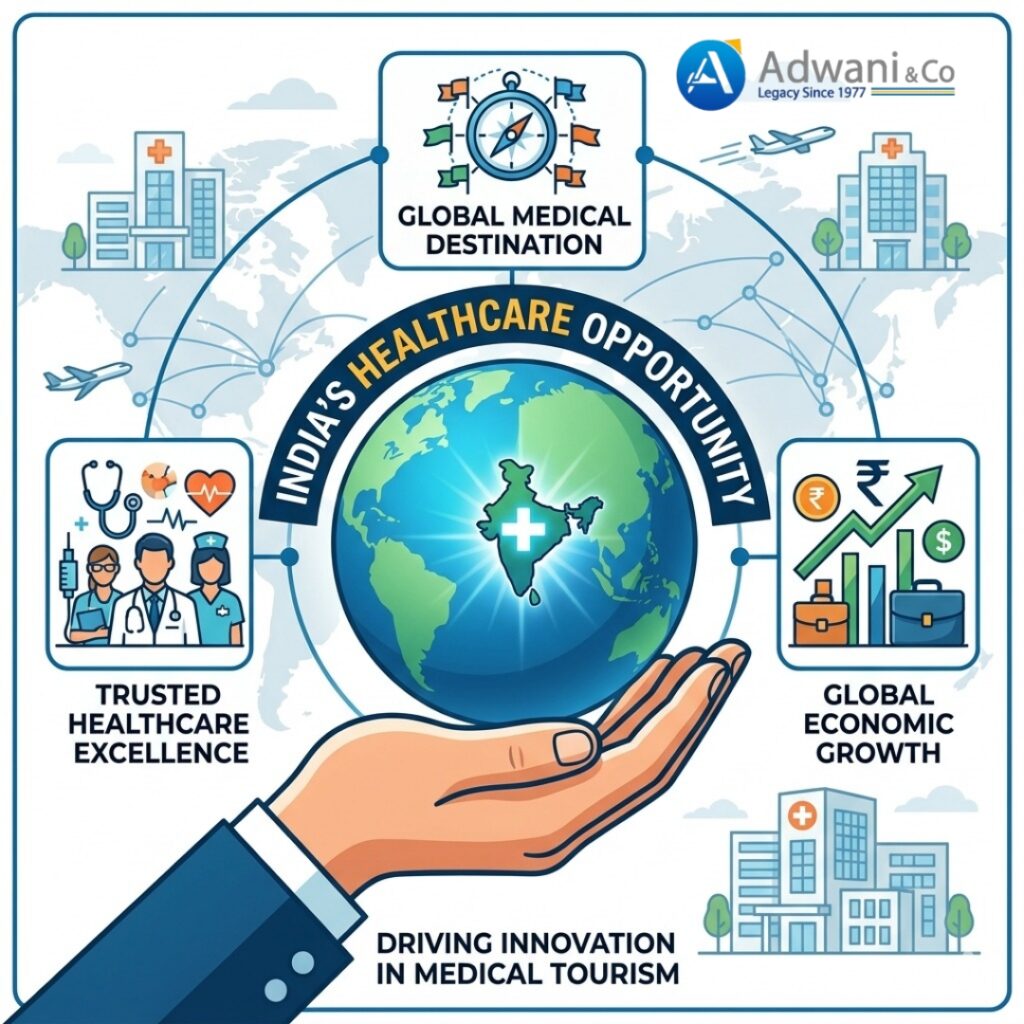
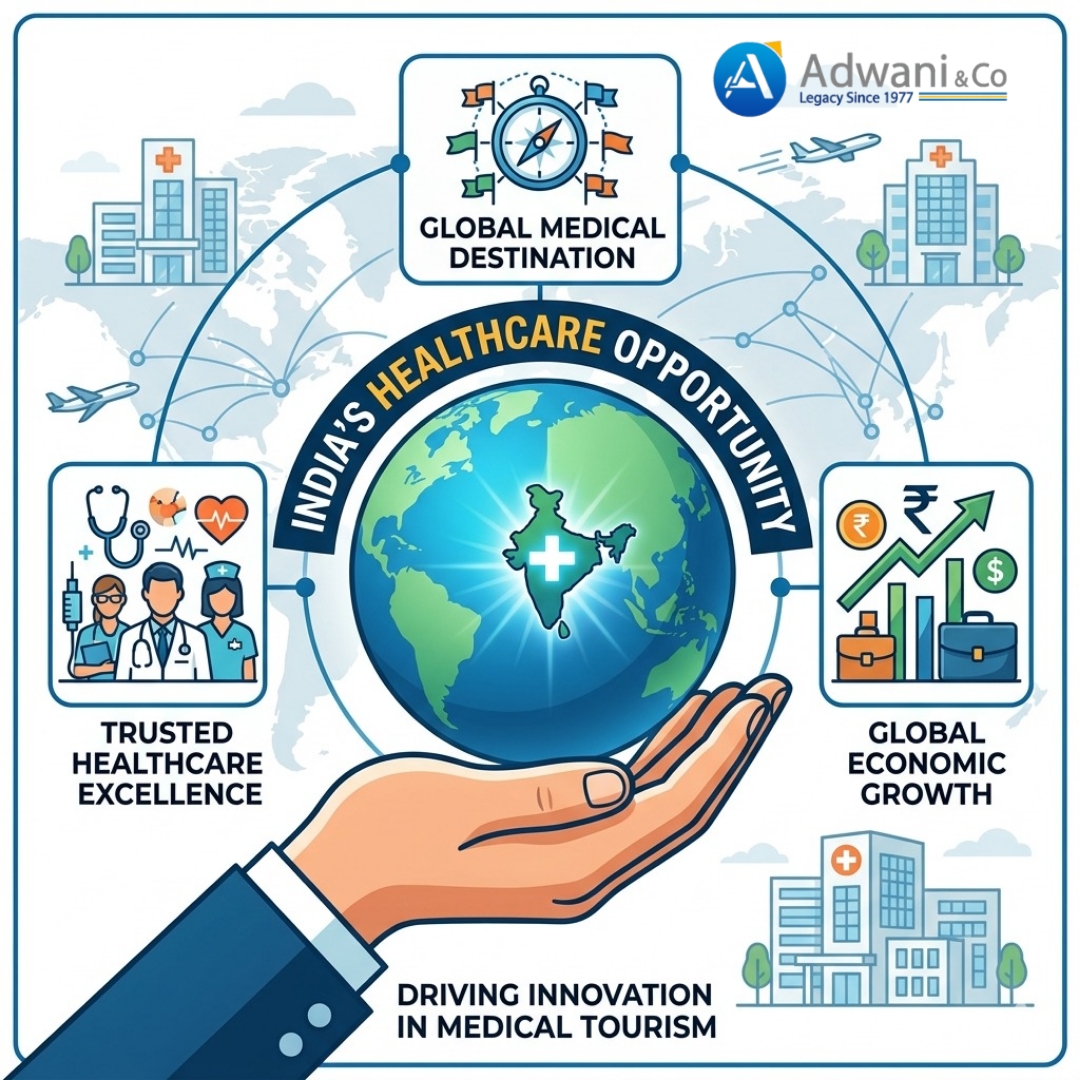
India has emerged as one of the leading destinations for international medical treatment due to its combination of highly skilled doctors, advanced hospital infrastructure and comparatively lower treatment costs.
Patients from regions such as the Middle East, Africa, South Asia and Central Asia increasingly travel to India for specialised treatments including oncology, cardiac surgery, orthopaedics and organ transplantation.
Recognising the economic potential of this sector, the Government of India has taken several policy initiatives to strengthen India’s position as a global healthcare destination. Key initiatives include the “Heal in India” programme, development of medical tourism infrastructure and improvements in visa facilitation for international patients.
Government Policy Measures to Promote Medical Tourism
India’s position in global medical tourism is built on a genuinely compelling proposition: treatment costs that are 60 to 80 percent lower than OECD country rates, combined with internationally accredited hospitals and surgeons trained at global institutions. A cardiac bypass surgery that costs USD 100,000 in the United States can be performed at world-class Indian hospitals for as little as USD 5,000.
Patients from Bangladesh, the Middle East, Africa, Central Asia, and increasingly from developed markets such as the UK and Canada, are choosing India for oncology, cardiac surgery, orthopaedics, organ transplants, fertility treatments, and robotic surgeries. As of 2026, NABH has accredited over 1,299 Indian hospitals using more than 600 safety parameters, and several major hospital groups hold Joint Commission International (JCI) accreditation placing them among the most trusted medical institutions in the world.
- India’s medical tourism market: USD 12.32 billion in 2026, growing to USD 22.11 billion by 2031
- Foreign medical tourist arrivals: 644,387 in 2024 (Ministry of Tourism data)
- e-Medical Visa now available to nationals of 171 countries
- JCI and NABH accredited hospitals across major metro and tier-2 cities
- Union Budget 2026–27: Five regional medical tourism hubs proposed
The Heal in India initiative positions India not just as a destination for cost-driven medical care, but as a global brand for quality, safety, and comprehensive patient experience. However, for every international patient that steps into an Indian hospital, a chain of financial, regulatory, and compliance obligations is triggered that requires expert navigation.
(b) Development of Medical Tourism Hubs
Recent policy announcements have proposed the creation of regional medical tourism hubs through collaboration between government and private healthcare institutions.
These hubs are expected to integrate:
- Tertiary care hospitals
- Diagnostic centers
- Rehabilitation facilities
- Wellness and AYUSH centers
- International patient facilitation services
The objective is to create a structured ecosystem for international patients.
(c) Simplification of Medical Visa Regime
The Government has introduced Medical Visa (M-Visa) and Medical Attendant Visa (MX-Visa) categories to facilitate travel of international patients and their attendants.
Key features include:
- Expedited visa processing
- Multiple entry options for follow-up treatment
- Extension facility depending on treatment duration
These measures significantly improve international patient access to Indian healthcare institutions.
FEMA Framework for Medical Tourism
Cross-border healthcare services involve foreign exchange transactions and therefore fall under the regulatory framework of the Foreign Exchange Management Act (FEMA), 1999. Relevant regulations are administered by the Reserve Bank of India (RBI).
(a) Treatment of Healthcare Services as Export of Services
When a foreign patient travels to India and receives treatment from an Indian hospital, the service is generally treated as export of healthcare services, provided payment is received in convertible foreign exchange.
Export of services is governed by:
- FEMA (Current Account Transactions) Rules
- RBI Master Directions on Export of Services
Hospitals receiving foreign exchange must route the transaction through Authorised Dealer (AD) banks.
(b) Permitted Modes of Payment
Hospitals may receive payments from international patients through:
- Foreign inward remittance through banking channels
- International credit or debit cards
- Payment through authorised forex intermediaries
- Advance remittances for scheduled medical procedures
Proper documentation must be maintained including:
- Patient identity records
- Treatment invoices
- Proof of foreign exchange receipt
(c) Foreign Currency Accounts
Hospitals dealing with international patients may maintain foreign currency accounts subject to FEMA regulations and approval of authorised banks for operational convenience.
These accounts help manage:
- International insurance payments
- Advance treatment deposits
- Refunds or adjustments for overseas patients
(d) Payments to International Medical Facilitators
Many hospitals engage international medical tourism facilitators or referral agents who assist foreign patients in accessing Indian healthcare services.
Payments to such facilitators involve:
- Outward remittances under FEMA
- Compliance with RBI regulations on foreign payments
- Documentation supporting the service agreement
Such transactions must be routed through authorised banks with appropriate purpose codes.
GST Implications on Medical Tourism
Under the Goods and Services Tax framework, healthcare services provided by clinical establishments are generally exempt from GST.
Healthcare services include:
- Diagnosis
- Treatment
- Surgery
- Care for illness, injury or deformity
Therefore, treatment provided to foreign patients in India typically remains GST exempt, provided it qualifies as healthcare service under GST law.
However, certain services associated with medical tourism may attract GST, including:
- Accommodation arrangements
- Medical facilitation services
- Consultancy services by intermediaries
Hospitals must ensure proper classification of services to determine GST applicability.
Economic Impact of Medical Tourism
Medical tourism contributes significantly to the Indian economy through:
- Foreign exchange inflows
- Employment generation in healthcare and allied sectors
- Expansion of hospital infrastructure
- Growth in hospitality, travel and logistics sectors
The sector is expected to experience significant growth as India continues to strengthen its healthcare ecosystem and global reputation for specialised treatment.
Role of Compliance and Financial Advisory
As medical tourism expands, hospitals increasingly face complex regulatory requirements relating to:
- FEMA compliance
- Cross-border payment documentation
- Tax treatment of international services
- Contractual arrangements with global medical facilitators
Professional advisory services play an important role in ensuring that healthcare institutions comply with regulatory frameworks while efficiently managing international healthcare operations.
1. What FEMA rules apply when an Indian hospital receives payment from a foreign patient?
When an Indian hospital receives foreign currency payment from an international patient, it qualifies as export of services under FEMA. Payments must be received through Authorised Dealer banks, reported with correct purpose codes, and supported by patient and invoice documentation. RBI Master Directions on export of services govern the detailed requirements.
2.Do Indian hospitals need to deduct TDS when paying foreign medical facilitators?
Yes. Payments made by Indian hospitals to non-resident medical tourism facilitators are subject to withholding tax under Section 195 of the Income Tax Act. The applicable tax rate depends on domestic law or the DTAA between India and the facilitator’s country of residence. Proper TDS deduction, deposit, and Form 15CA/15CB compliance is required.
3.Can a medical tourism facilitator company in India receive foreign currency income?
Yes. An Indian medical tourism facilitator company can receive referral and facilitation fees in foreign currency from international patients or foreign referral agents. Such income must be received through authorised banking channels under FEMA, reported as business income for income tax purposes, and subjected to GST if the company is registered under GST. Proper documentation and FEMA purpose codes must be maintained.
4.. How can a CA firm help hospitals with medical tourism India compliance?
A qualified CA firm can assist hospitals with FEMA transaction structuring, GST classification and return filing, TDS on foreign payments, MCA annual compliance, income tax return preparation, and advisory on transfer pricing for international facilitator arrangements. Firms like Adwani and Company, with expertise in cross-border financial compliance and legal advisory, are specifically positioned to handle the multi-dimensional compliance needs of the medical tourism sector.
Conclusion
India’s healthcare sector is progressively integrating with the global medical ecosystem. Government initiatives, improved regulatory frameworks and internationally respected medical professionals position India strongly in the global medical tourism landscape. With continued policy support and compliance frameworks, Indian doctors and healthcare institutions are well placed to strengthen India’s reputation as a trusted destination for international medical treatment.
About the Author
Dr. Haresh Adwani
Ph.D. in Commerce | Law Graduate | Managing Partner, Adwani & Co LLP Dr. Haresh Adwani holds a Ph.D. in Commerce and is a qualified Law graduate with over two decades of hands-on experience in GST advisory, direct taxation, and statutory compliance for businesses across Pune and Maharashtra. As Managing Partner of Adwani & Co LLP Dr. Adwani has guided hundreds of SMEs, startups, and corporates through India’s evolving tax landscape. He is a recognised advisor on GST compliance, company formation, and Virtual CFO services, and regularly contributes to professional seminars and industry forums in Pune.
DISCLAIMER
This blog is intended for informational and educational purposes only. It does not constitute legal, financial, or professional tax advice. Tax laws and provisions under the Income Tax Act, 1961, are subject to amendment; figures and deadlines mentioned are based on information available as of the date of publication. Readers are strongly advised to consult a qualified Chartered Accountant or tax professional before taking any action based on this content. Adwani and Company and Dr. Haresh Adwani shall not be held liable for any decisions made on the basis of information provided herein. Always refer to official sources at incometax.gov.in and cbdt.gov.in for the latest and authoritative information.